Victor Vasarely’s unprecedented use of perceptual abstraction and his early anticipation of the transformation of human visual perception establish him as one of the most significant artists of the 20th century.
Guided by his motto, “Art for All”, Vasarely believed that art should be affordable, accessible, and understandable to everyone, rather than reserved for a cultural elite. He maintained that appreciation of art should not require specialized academic knowledge. His works are now included in major museum collections worldwide, including the Albright-Knox Art Gallery, the Art Institute of Chicago, the Tate Modern, and the Peggy Guggenheim Collection.
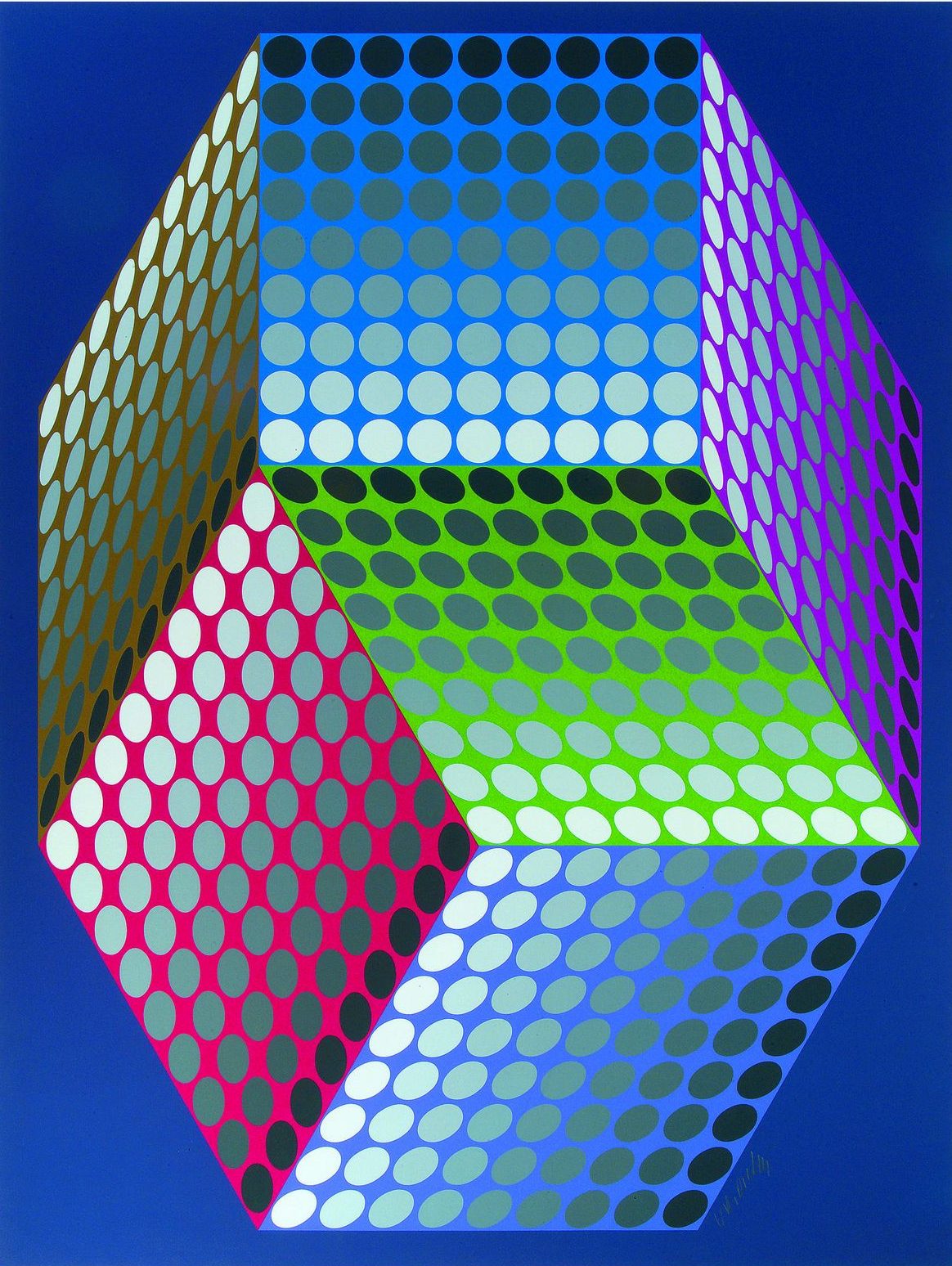
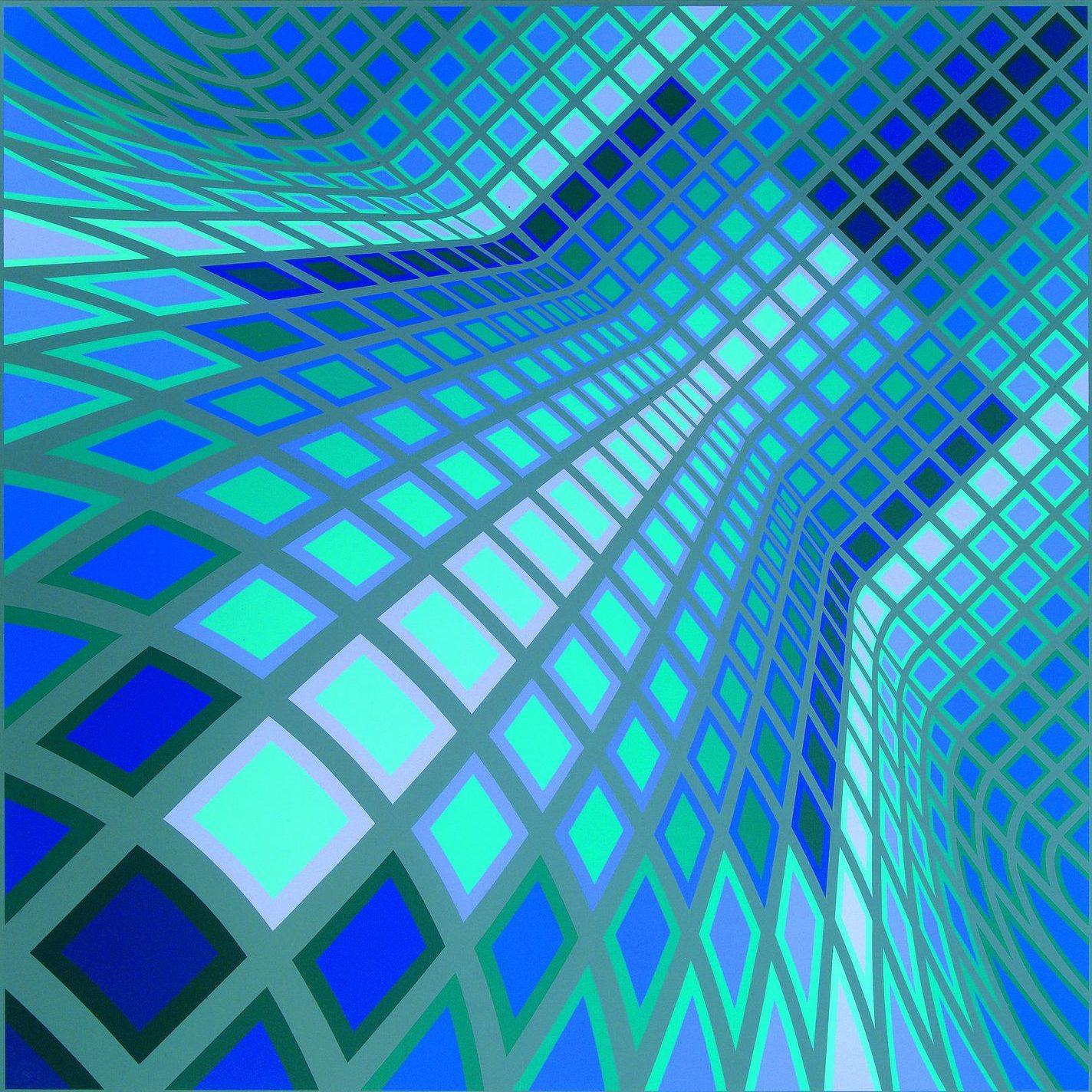
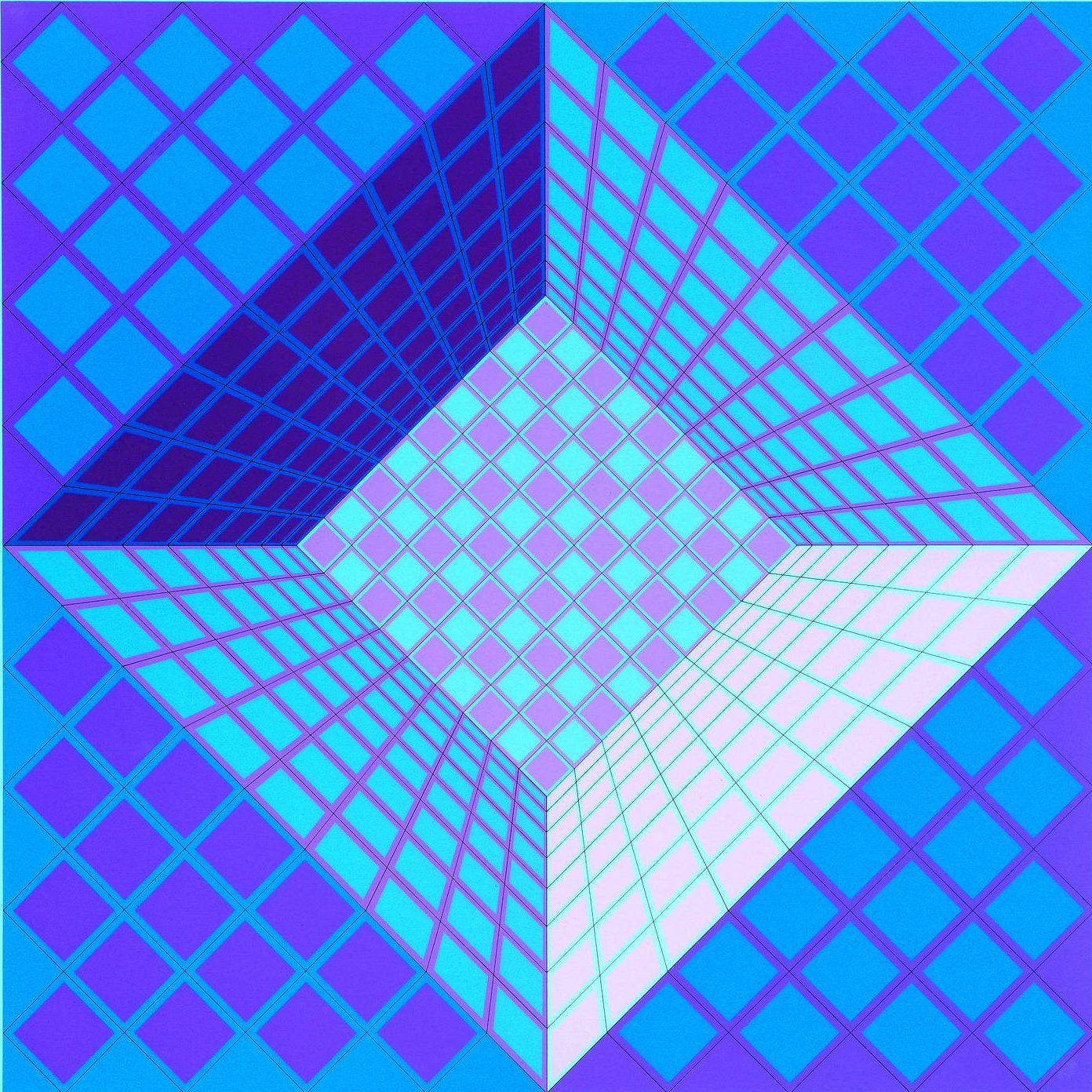
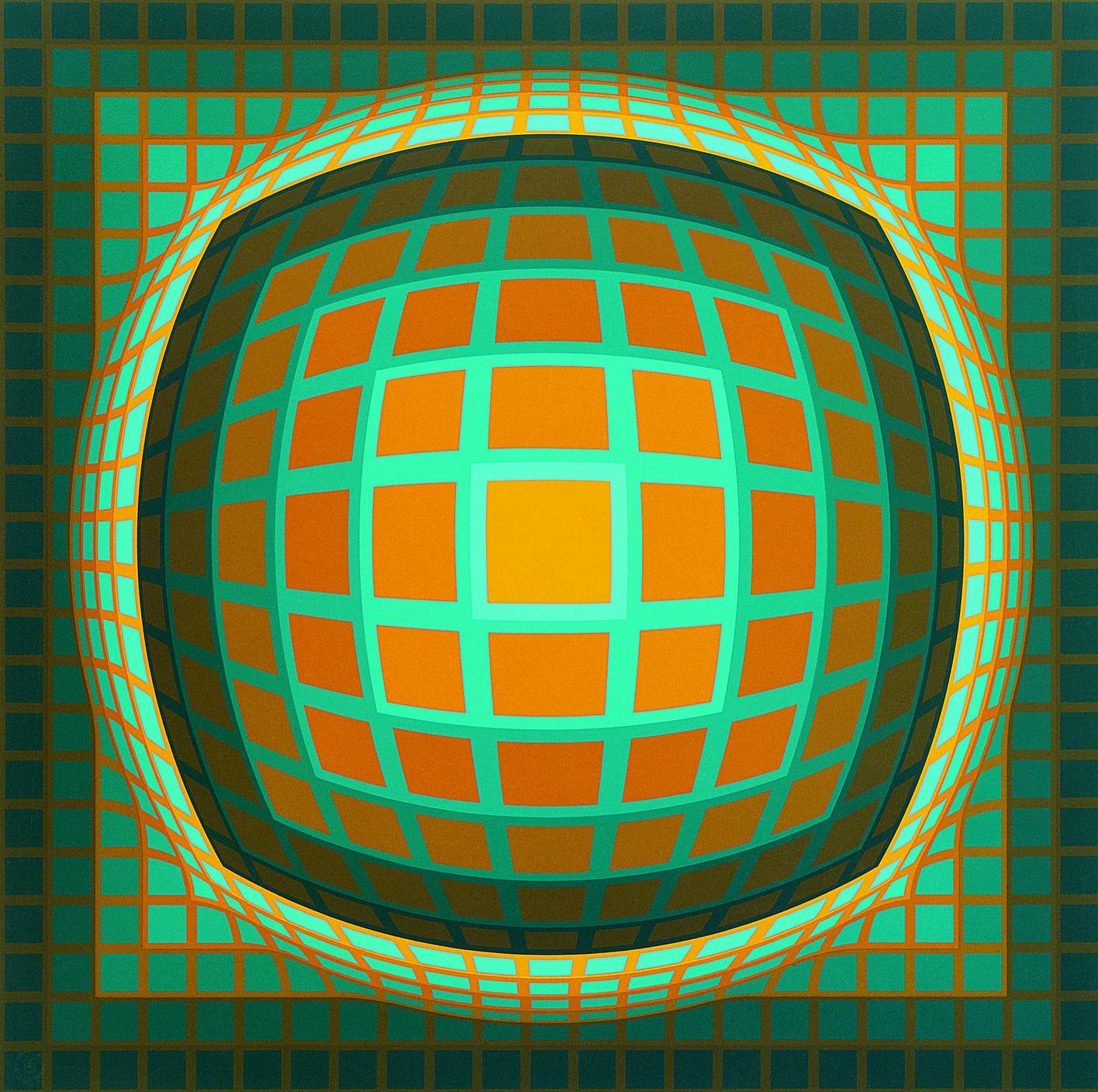
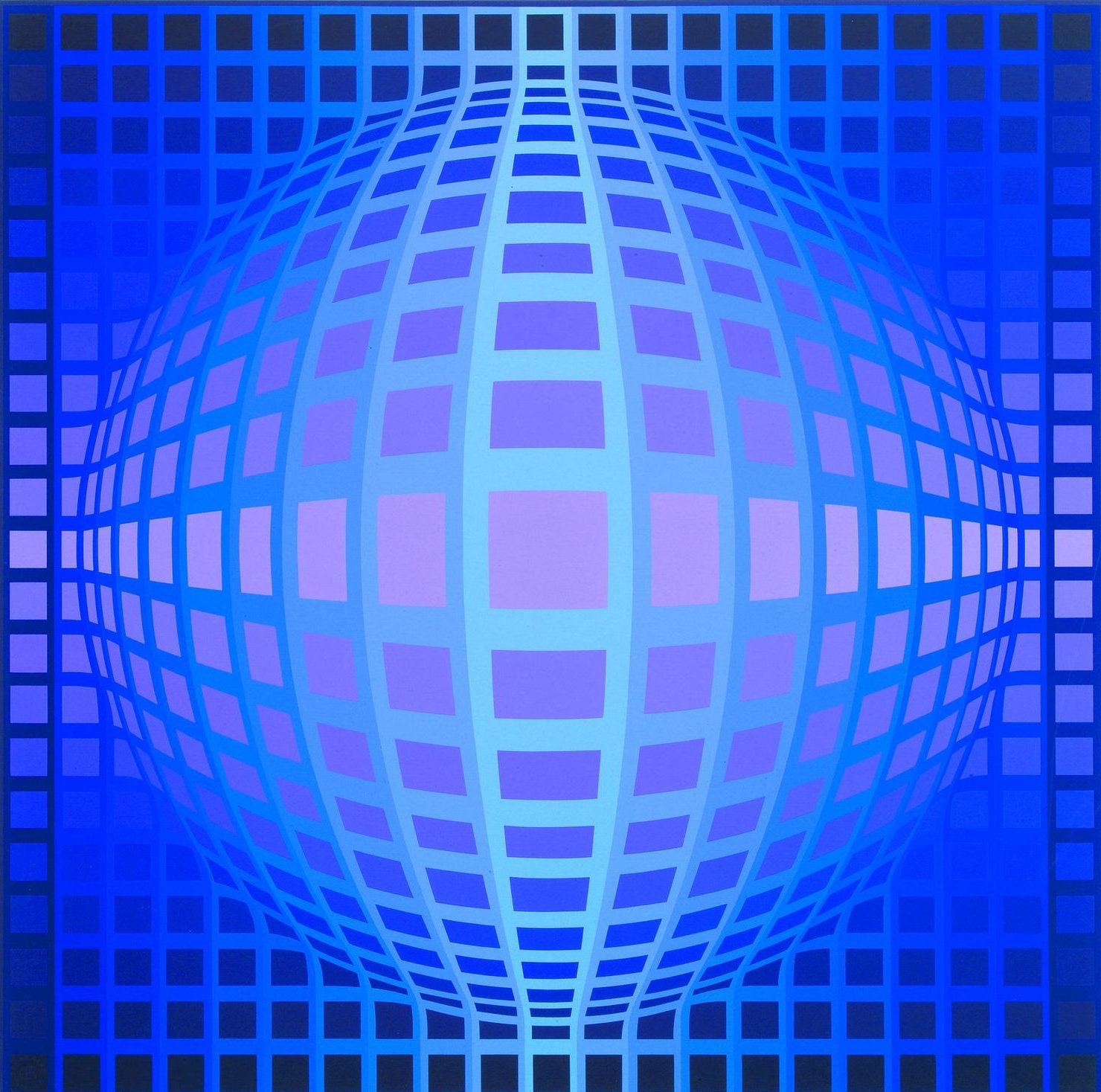
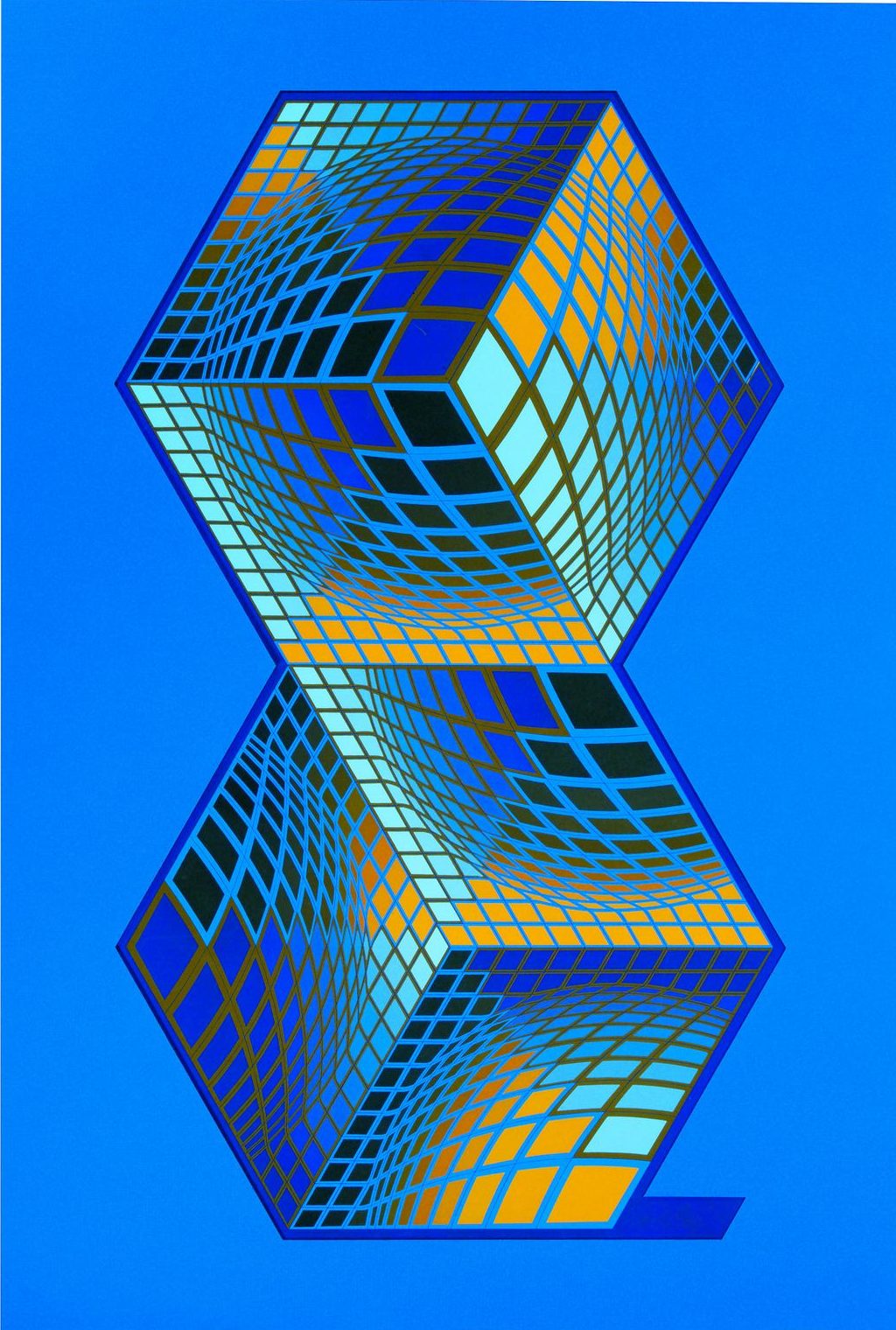
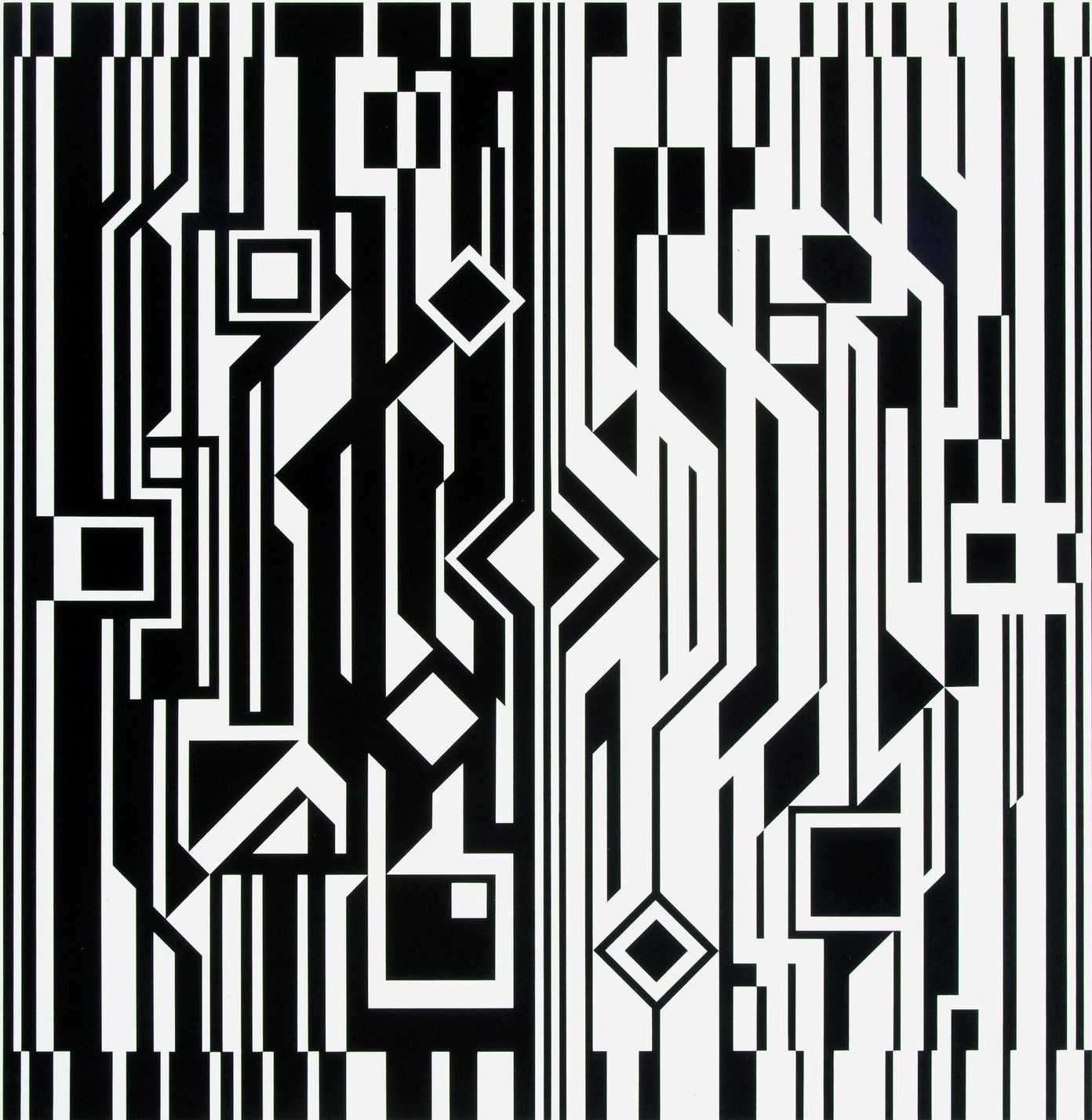
In his works, flat and static images acquire the illusion of movement, depth, and volume, while figurative forms are transformed into abstract patterns and abstract compositions, in turn, suggesting recognizable imagery. Through his innovative manipulation of color, background, geometric structures, and materials, Vasarely developed a unique visual language based on optical illusion. These experiments gained widespread recognition during the 1960s and 1970s, when Op Art emerged as a major artistic movement. By extending optical art into graphic design, advertising, and architecture. Vasarely helped integrate this style into everyday life. His work profoundly influenced a new generation of artists and left a lasting impact on printmaking, poster design, and textile design.
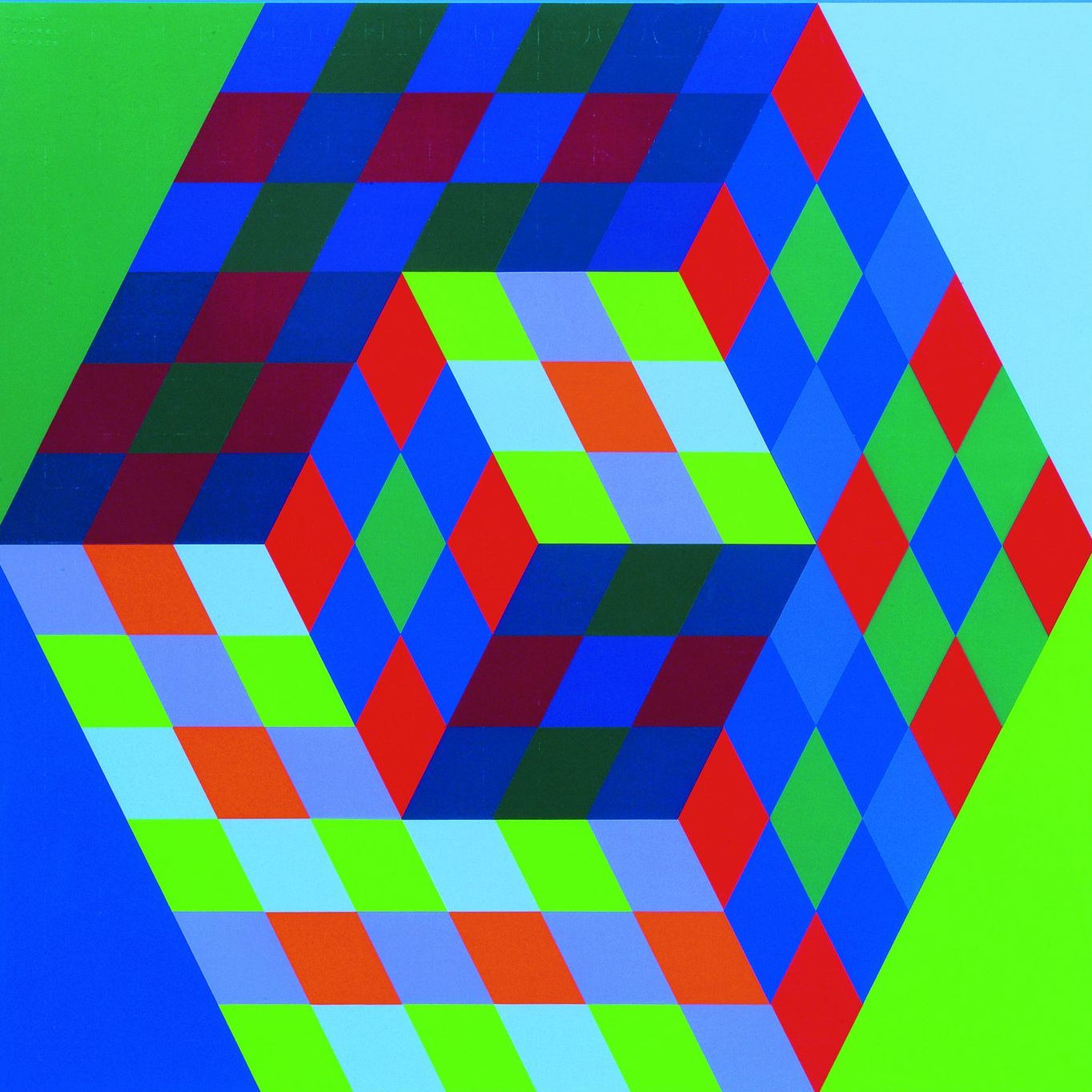
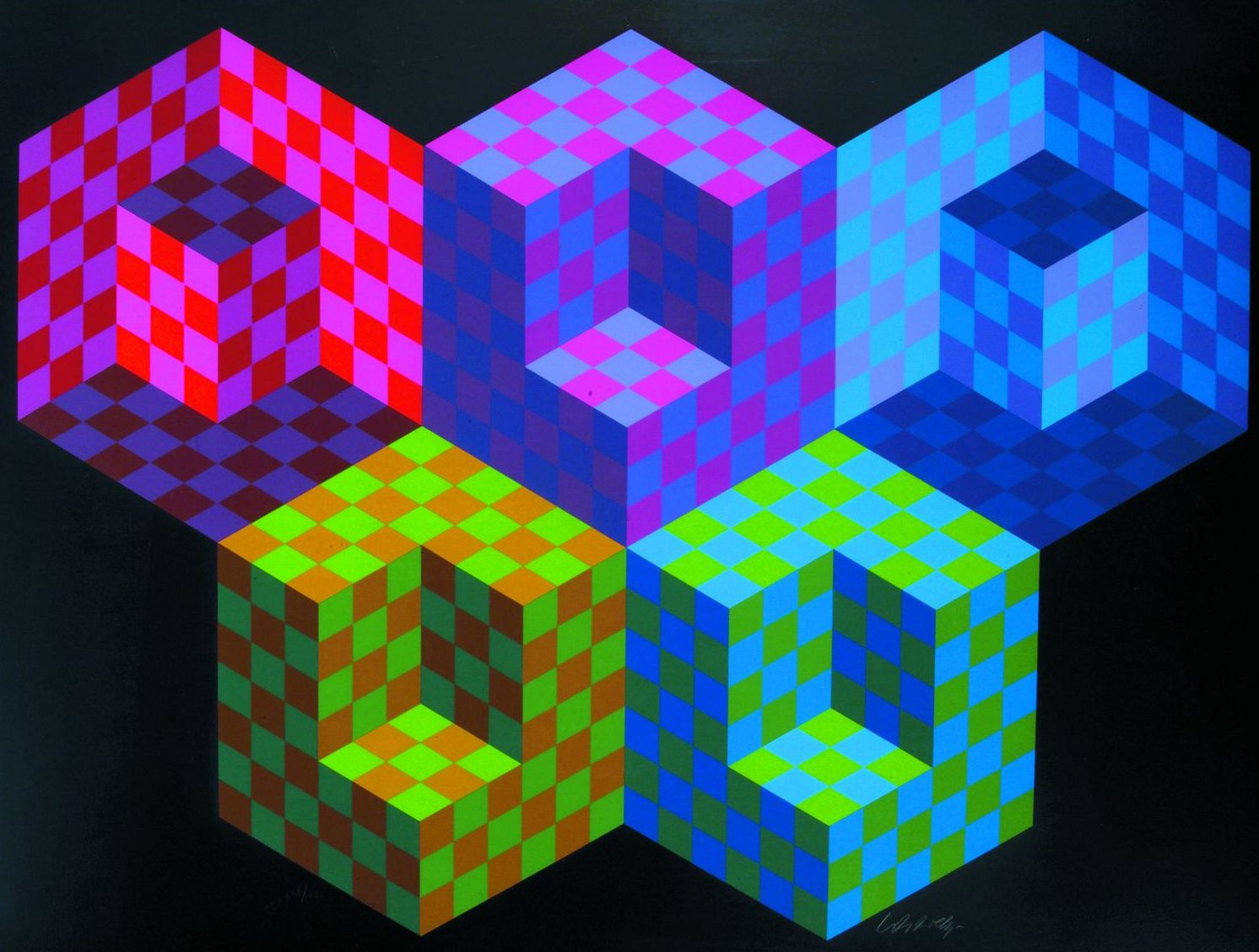
Utilizing geometric shapes and vibrant colors, many of Victor Vasarely’s works create a compelling illusion of spatial depth and movement. His artistic vision was shaped by a wide range of influences, including the principles of the Bauhaus, the theories of Wassily Kandinsky, and the ideas of Constructivism.
After settling in Paris in 1930, Vasarely worked as a graphic designer while simultaneously producing early works that anticipated the development of Op Art. During the 1940s, he experimented with styles influenced by Surrealism and Abstract Expressionism. Later, in the 1960s and 1970s, his optical compositions became part of popular culture, appealing on album covers, in fashion publications, and across various forms of graphic design.
Victor Vasarely’s bold monochromatic and vividly colored geometric compositions often appear to swell, reduce, undulate, and pulsate before the viewer’s eyes. To create these remarkable optical effects – illusions of mass, depth, and movement emerging from a formal flat two-dimensional surface- Vasarely experimented extensively with color, background, geometric configurations, and materials. Through the use of strong contrasts, distorted grids, and carefully manipulated perspective, he transformed static images into dynamic visual experiences that challenge conventional perceptions of space and motion.
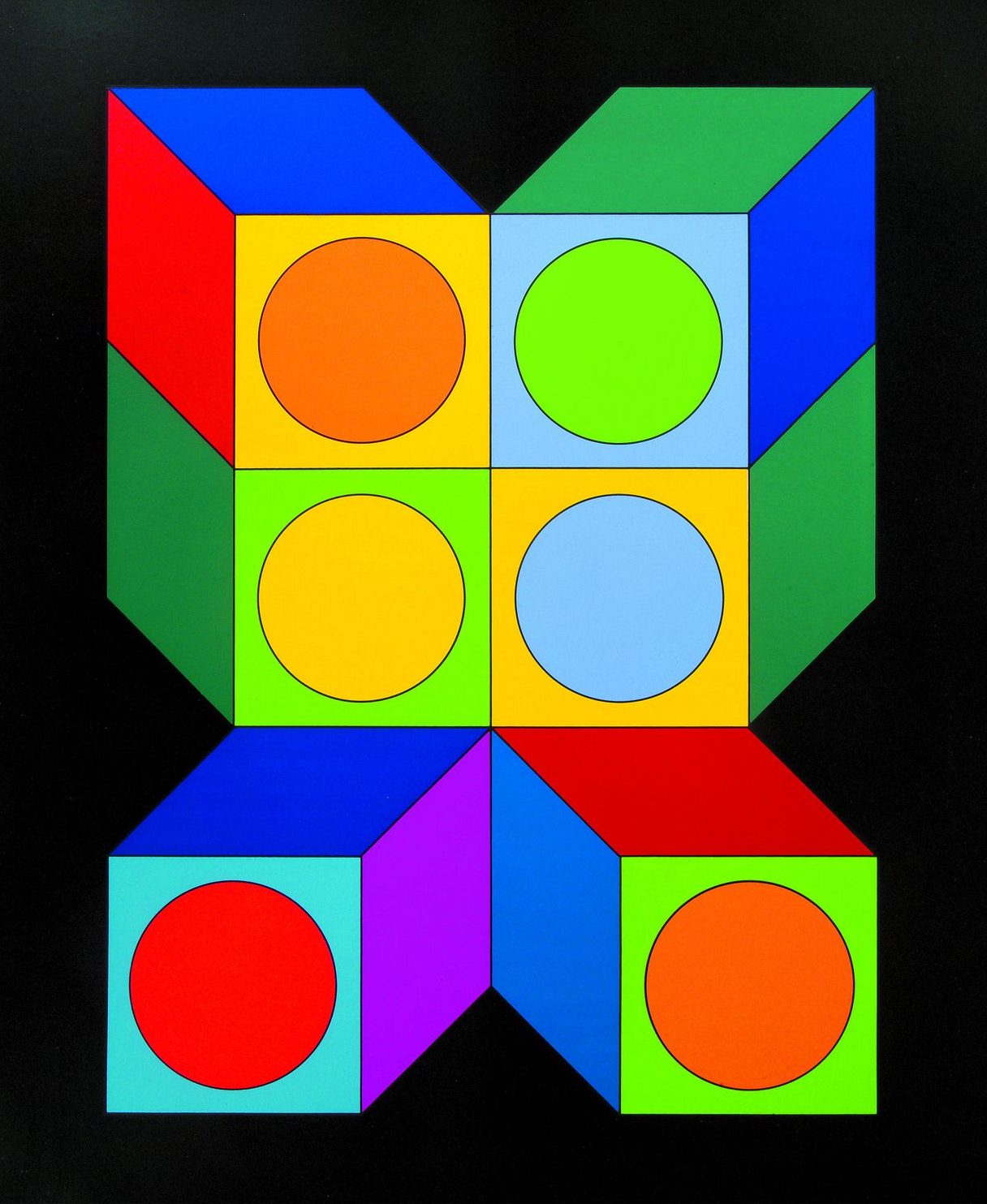
This collection presents a diverse selection of Vasarely’s most iconic works, including serigraphs, watercolors, and gouaches. Together, these pieces demonstrate his remarkable ability to perceive the world through a geometric prism, reducing complex shapes and forms to a universal set of basic “art elements”. By systematically combining these elements, Vasarely created visually striking compositions that convey both aesthetic beauty and conceptual death.
Vasarely’s enduring fascination with linear pattern and geometric order led him to produce works that oscillate between figurative and abstract representation. His pioneering “kinetic” visual experiments not only transformed the possibilities of two-dimensional art but also marked a significant turning point in modern art history. In many ways, his work anticipated a future shaped by algorithms, computer programming, and the digital networks that would later define the contemporary world.