

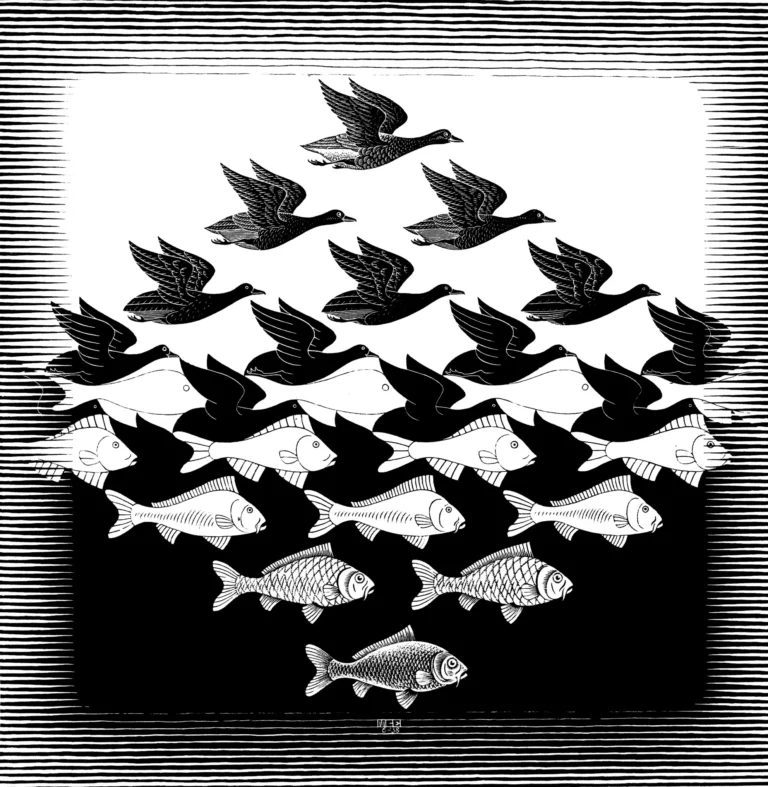










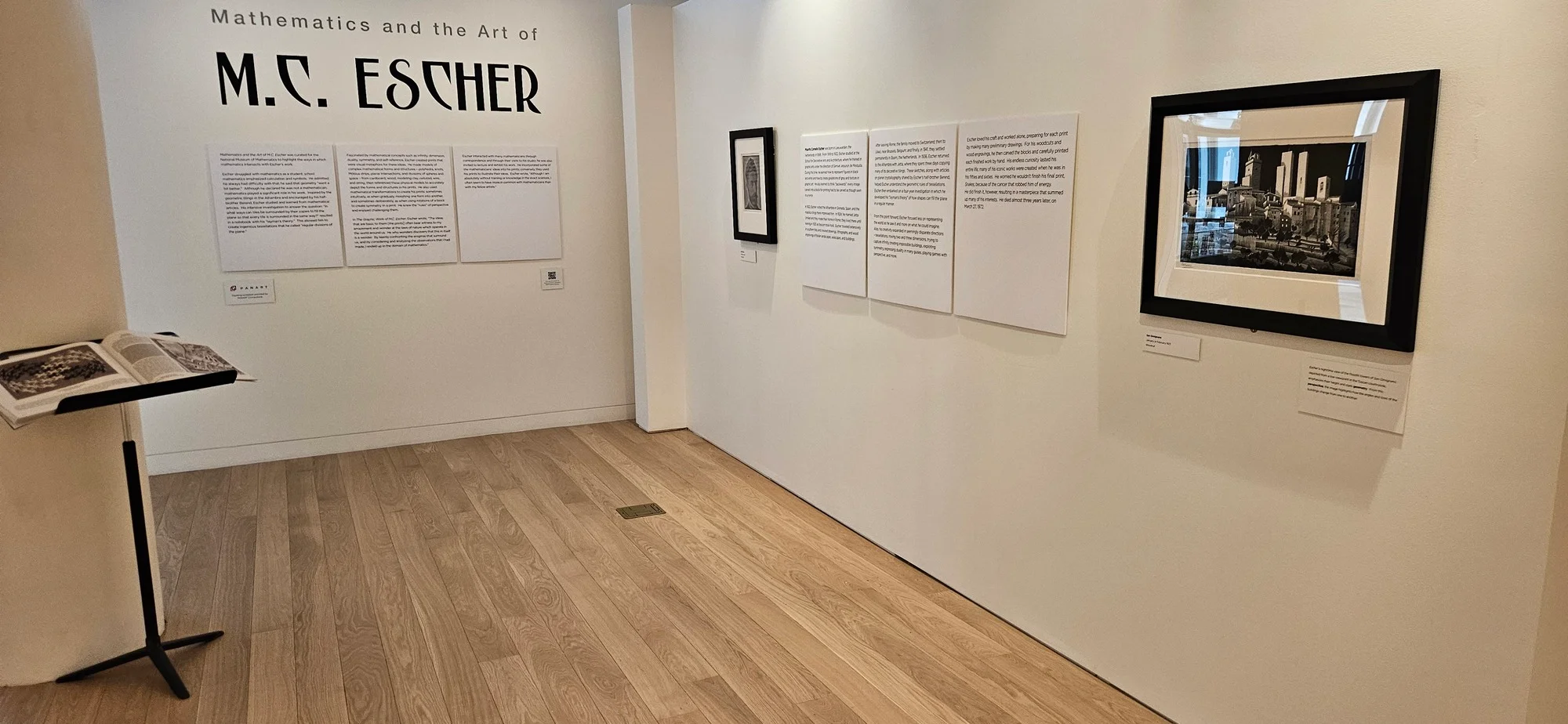
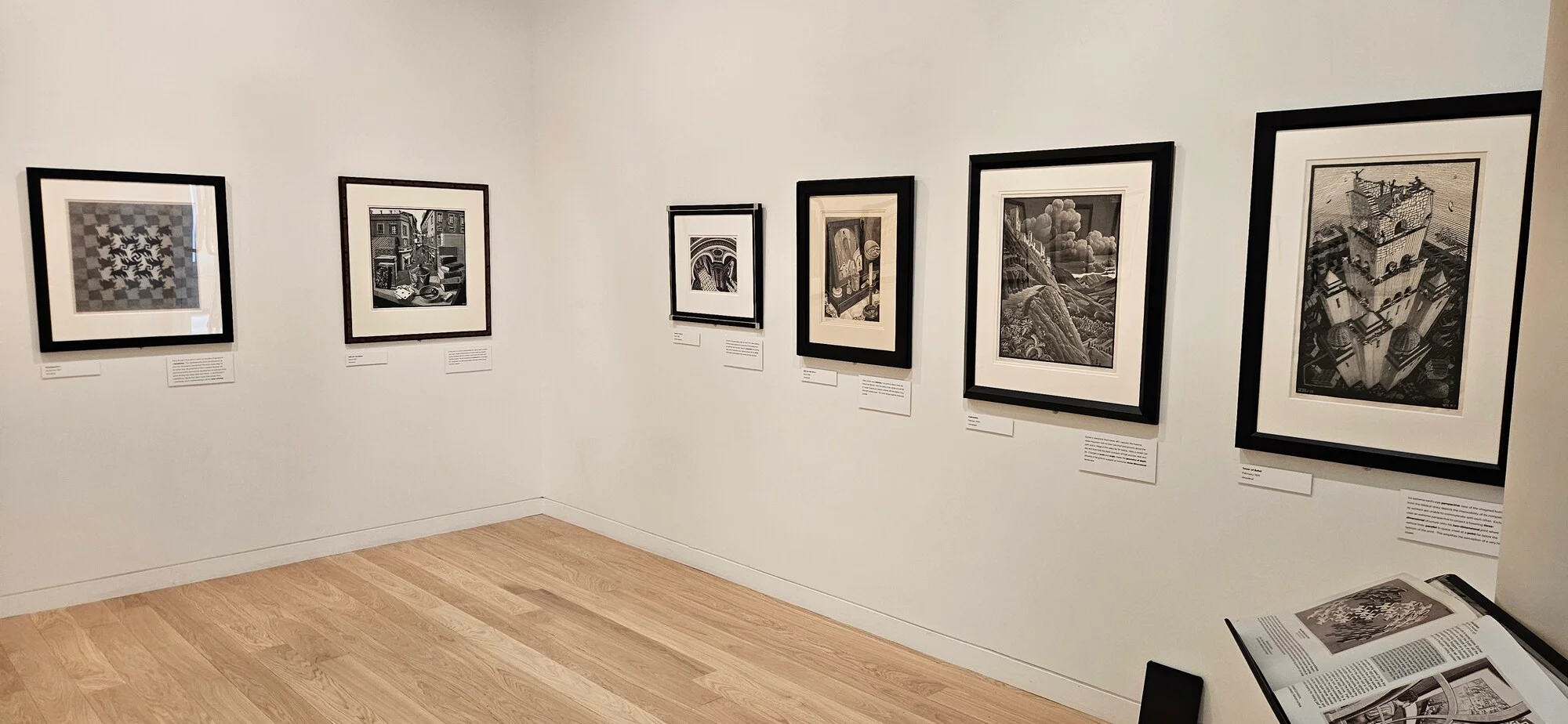
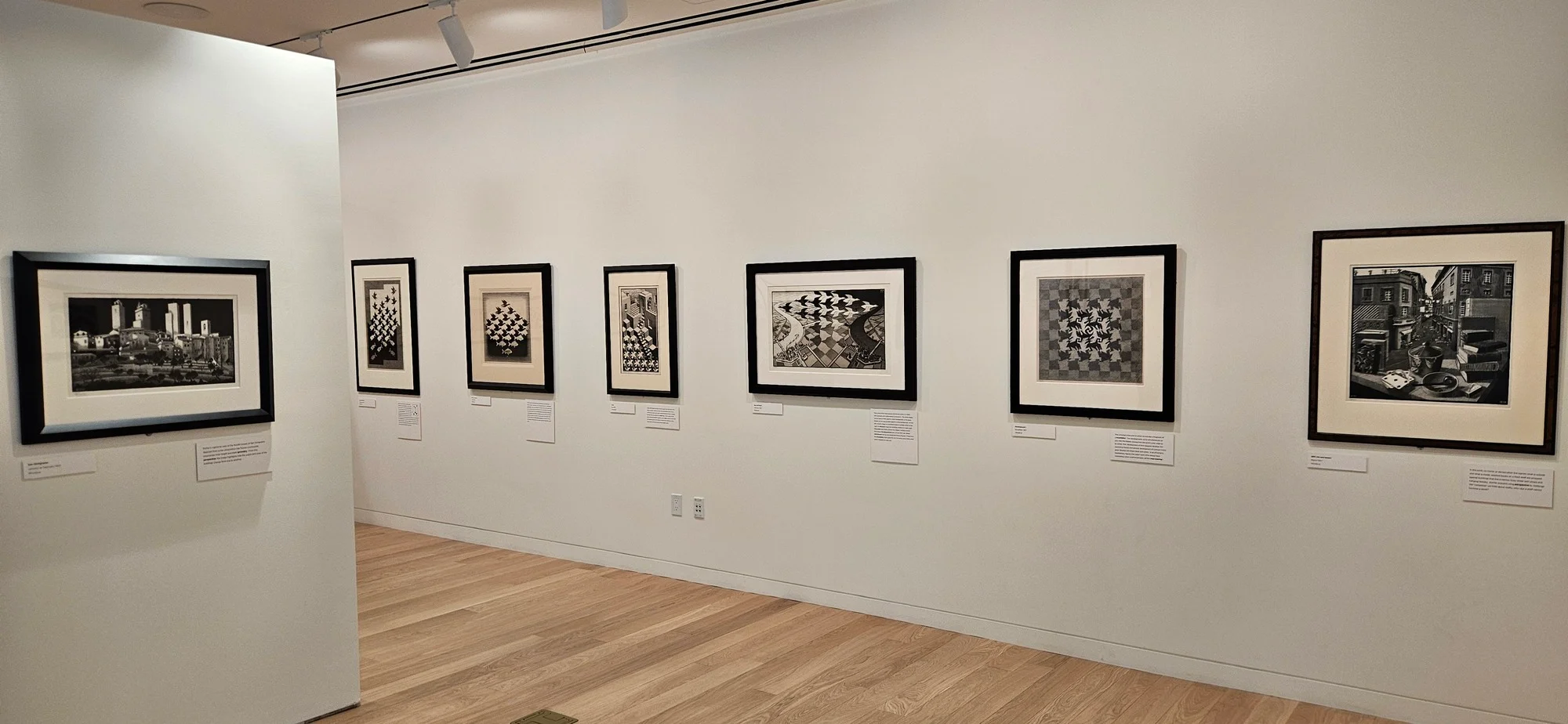
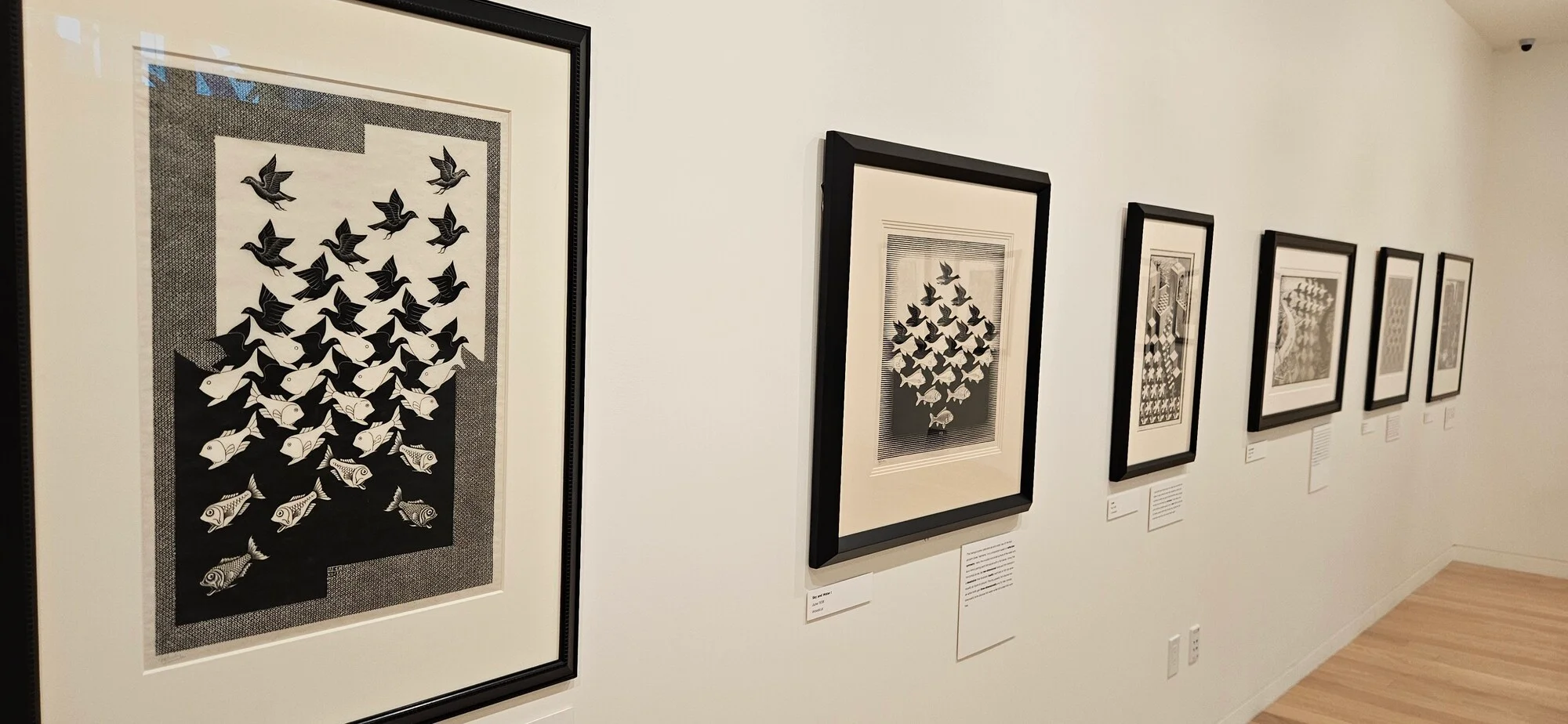
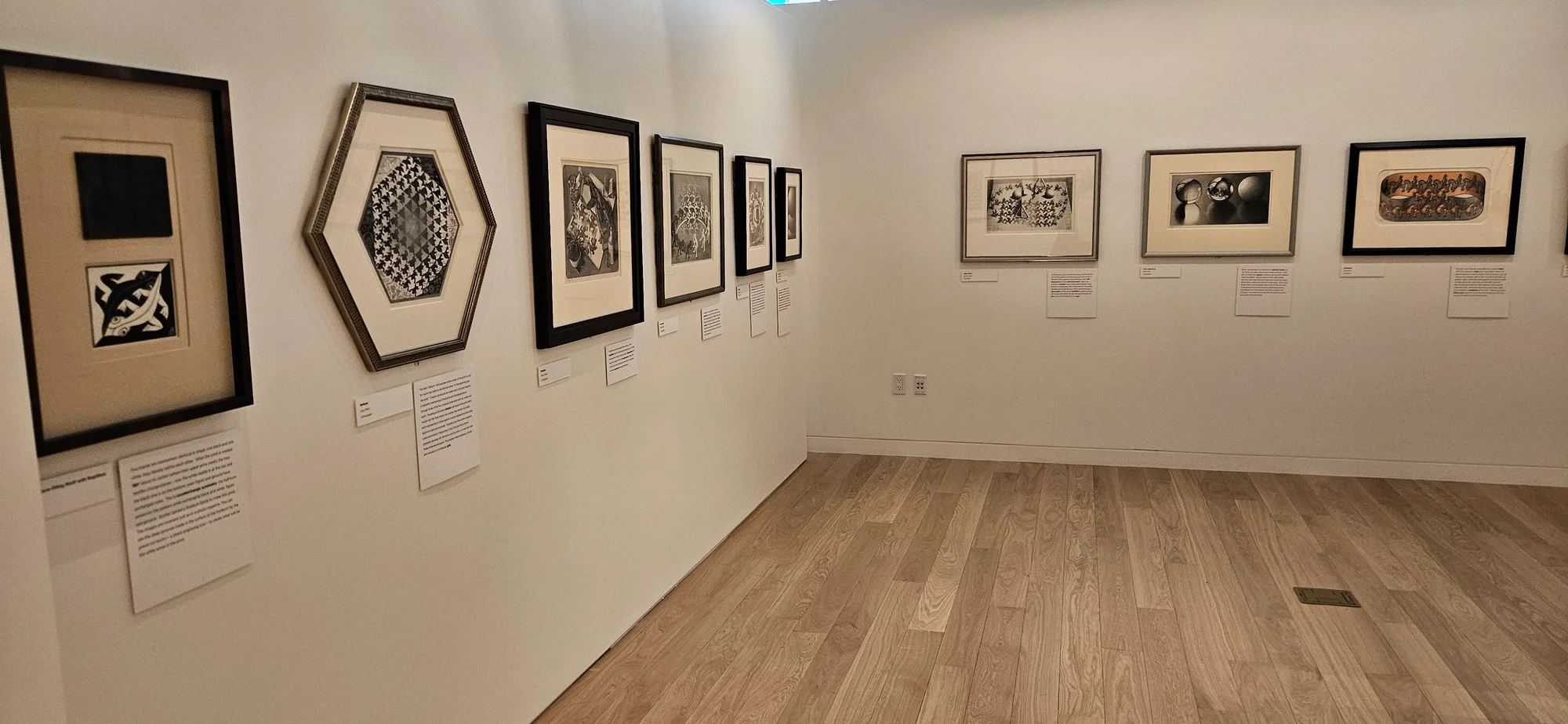
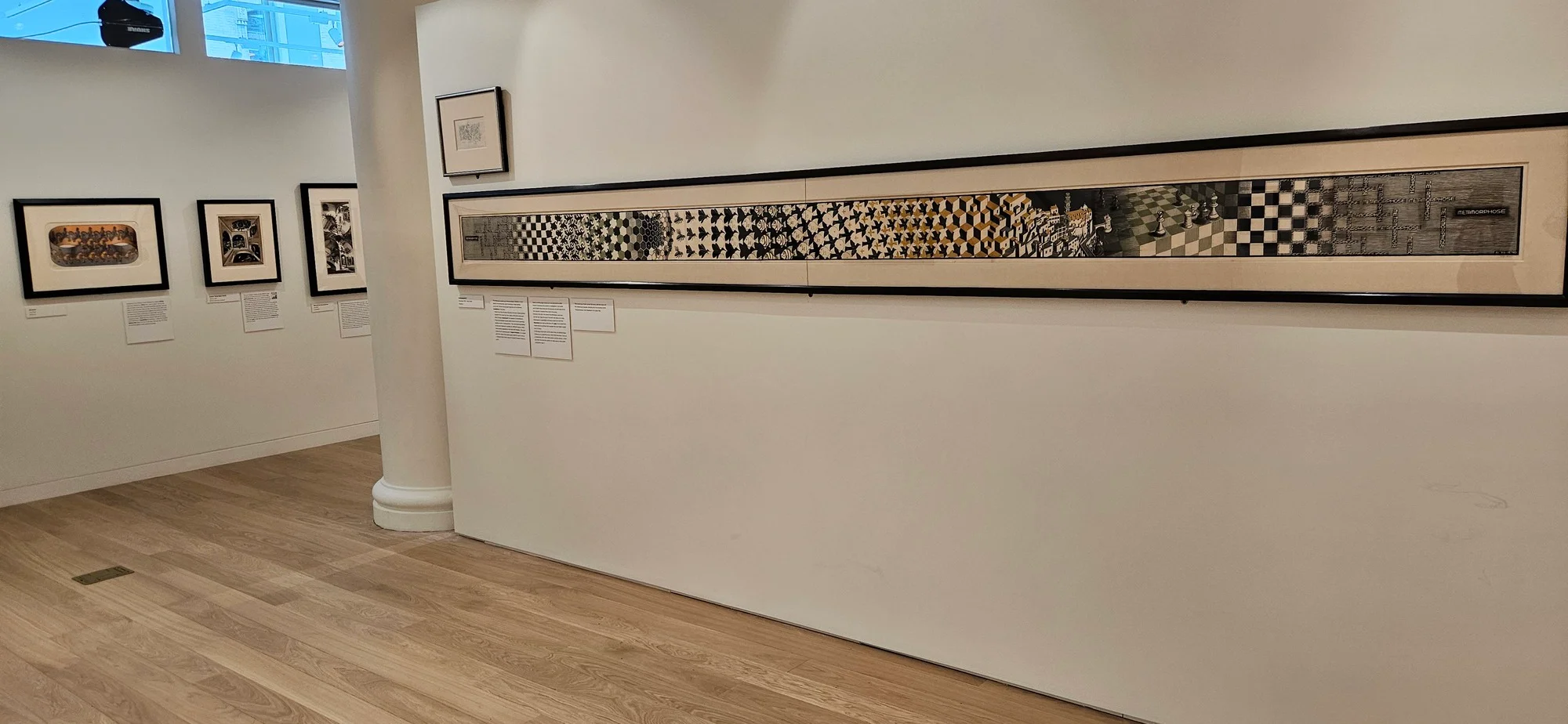
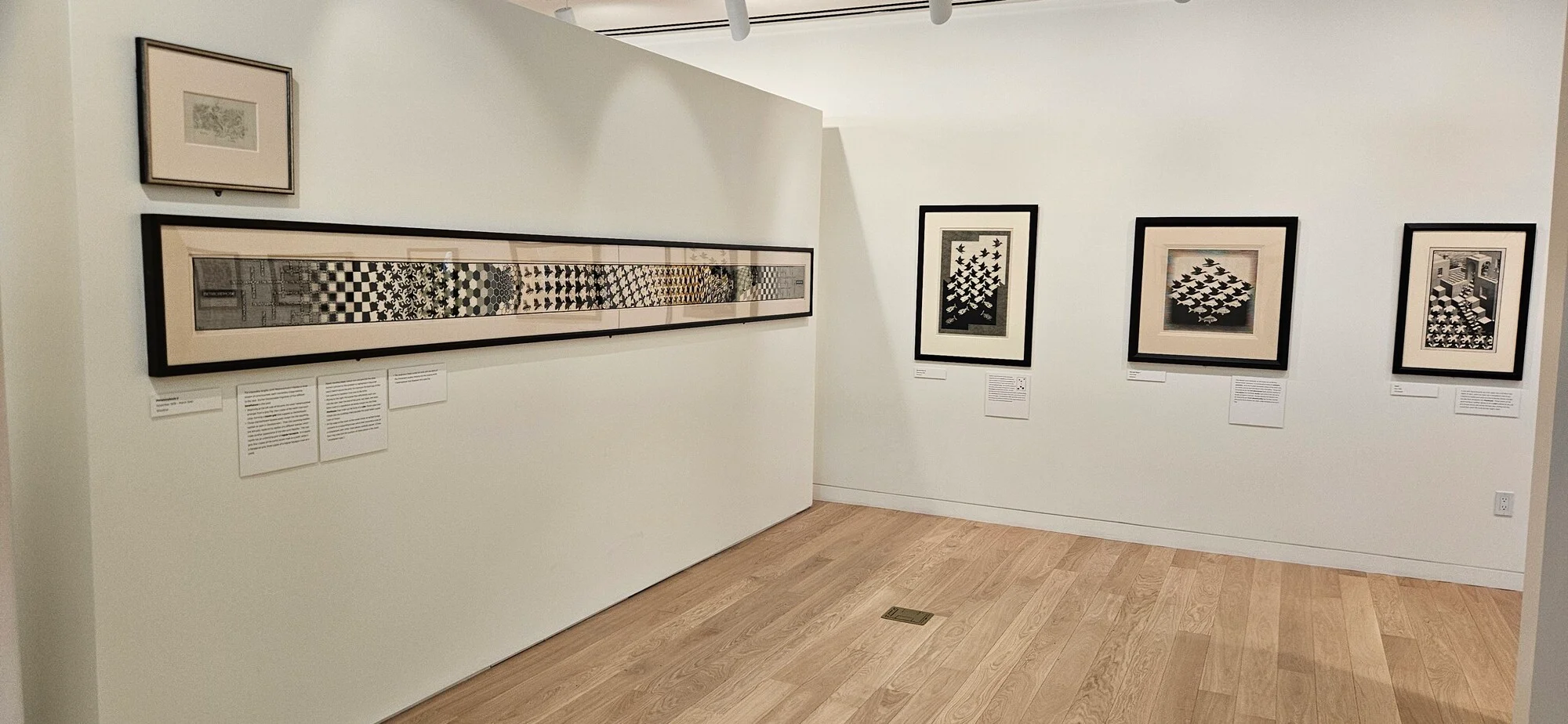
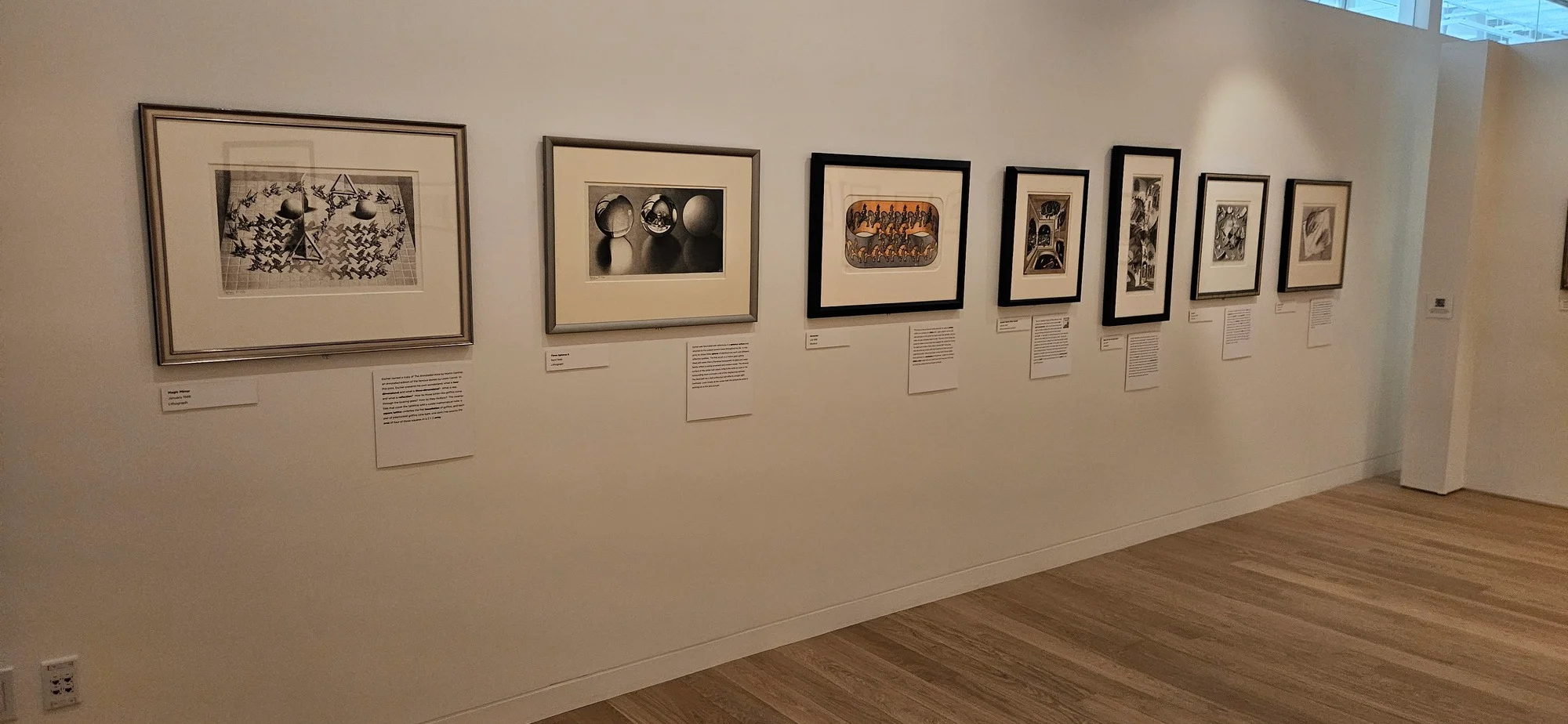
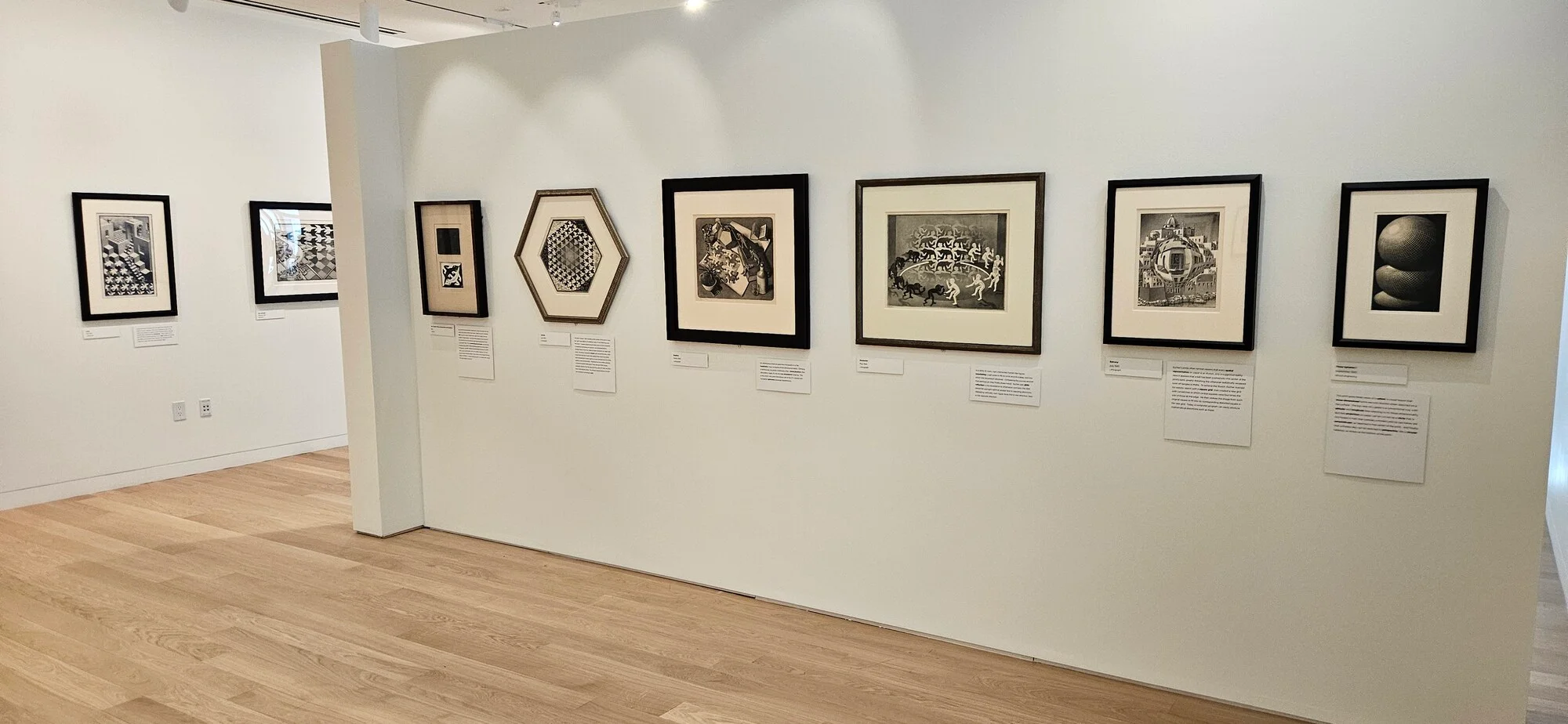
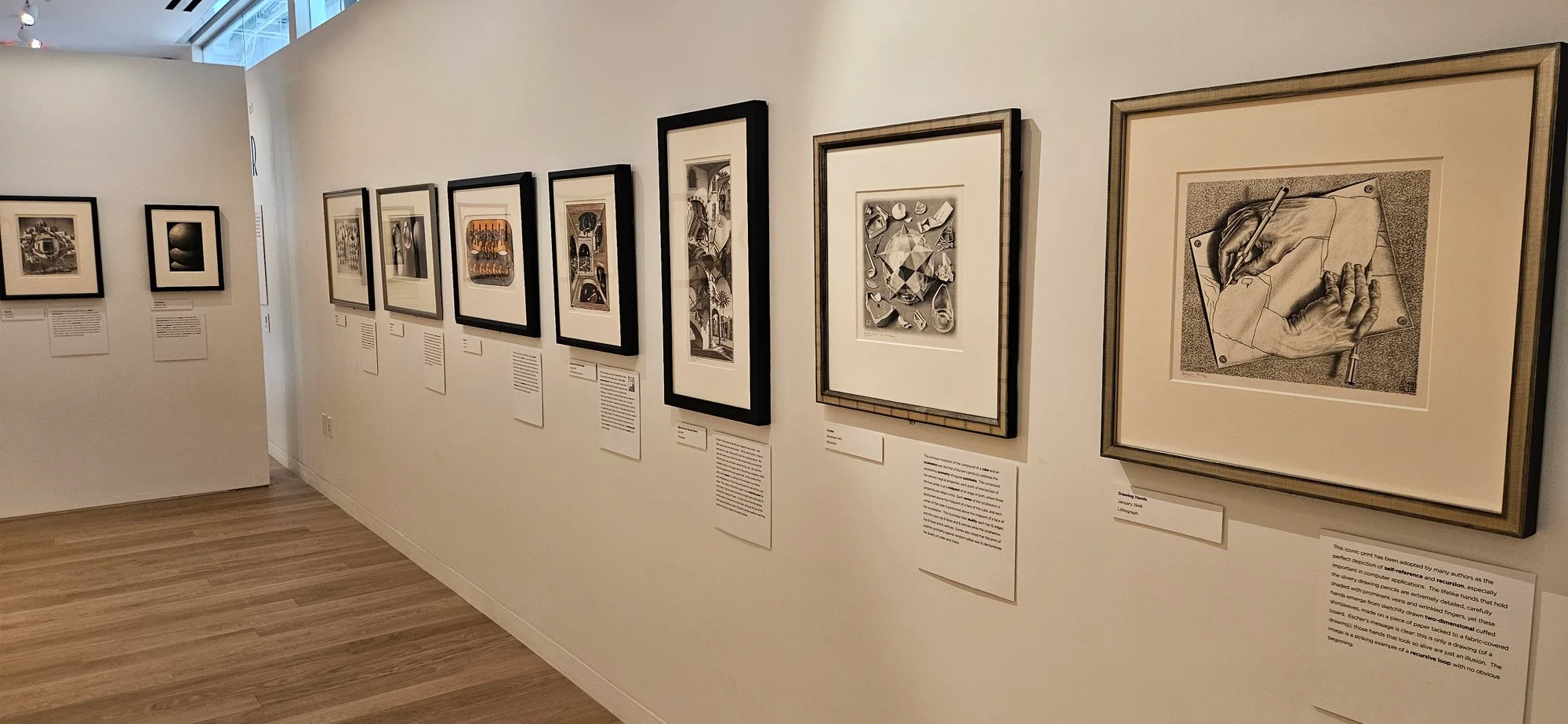
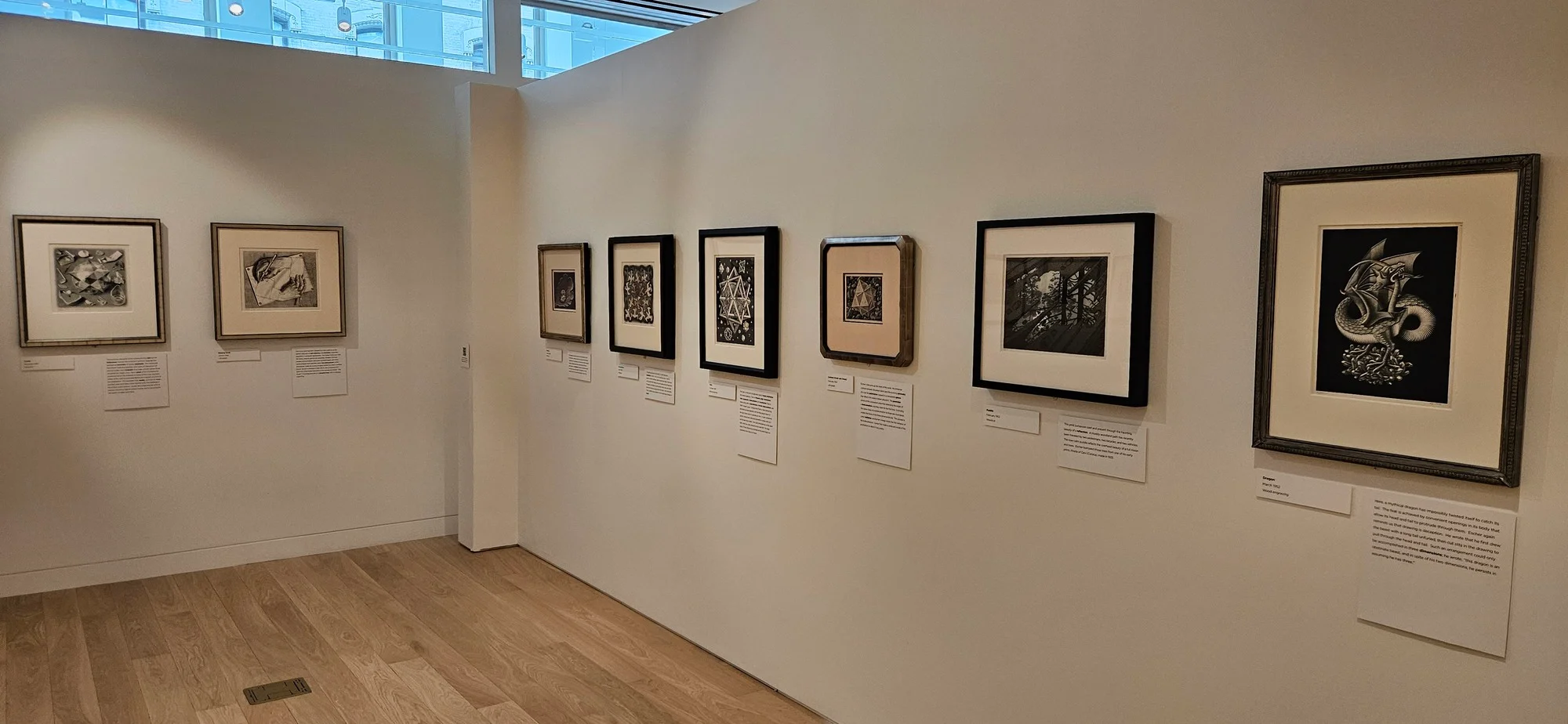
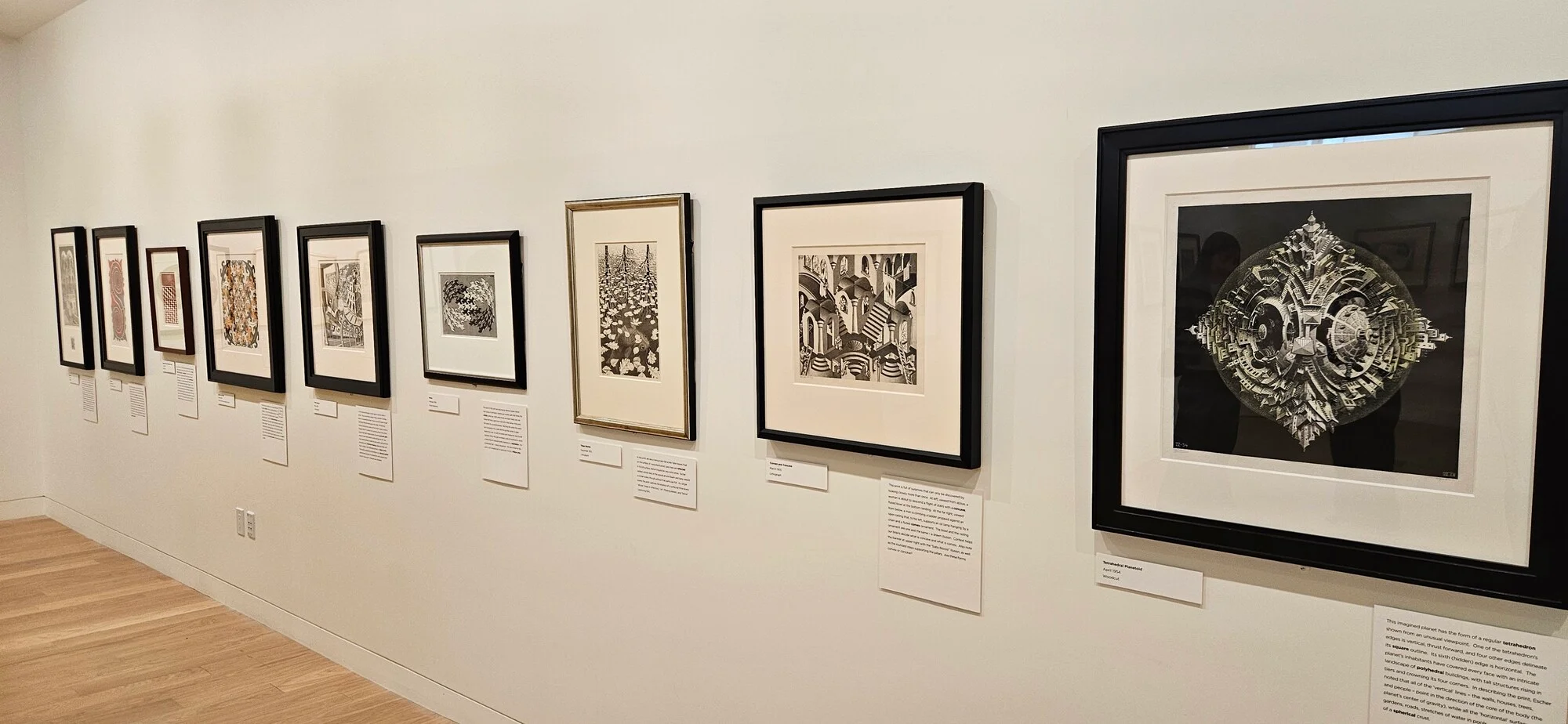
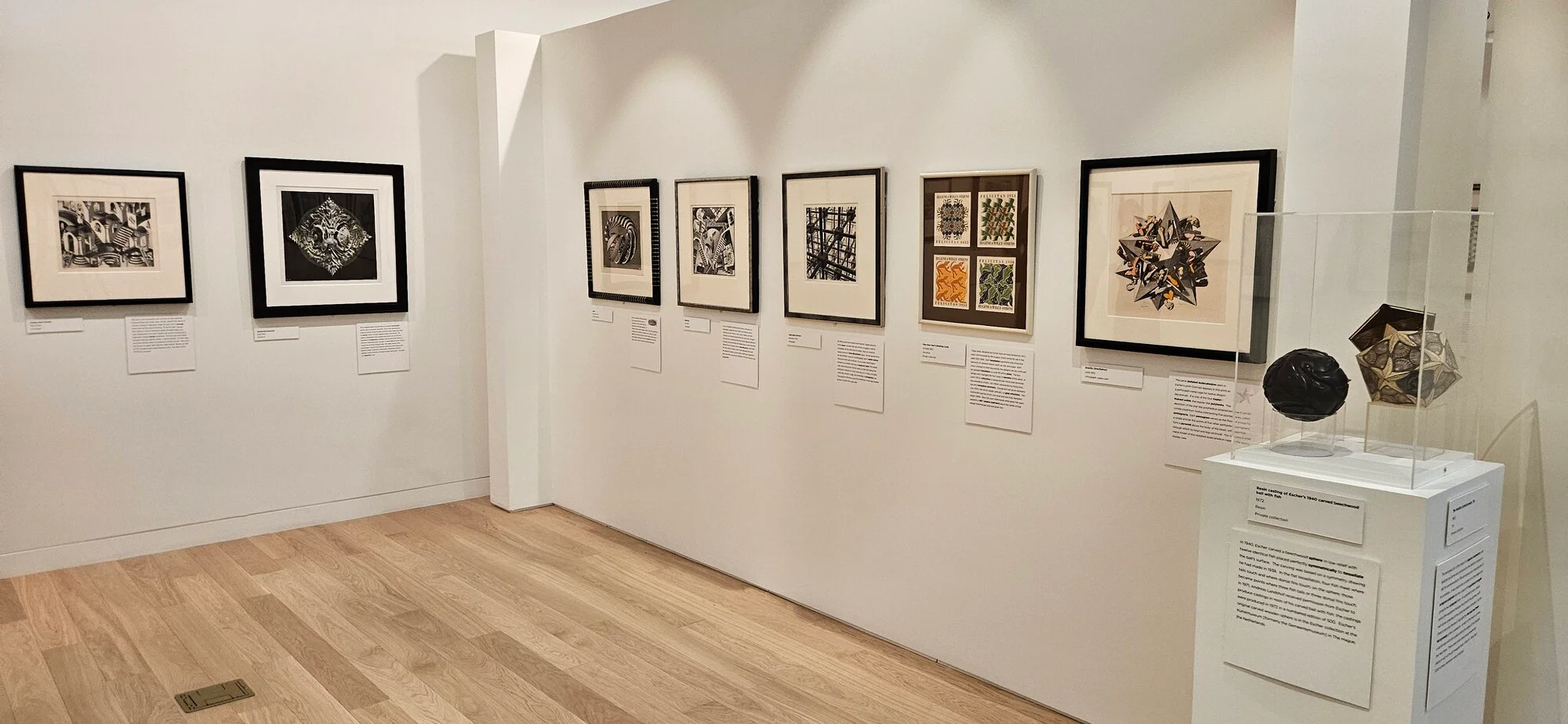
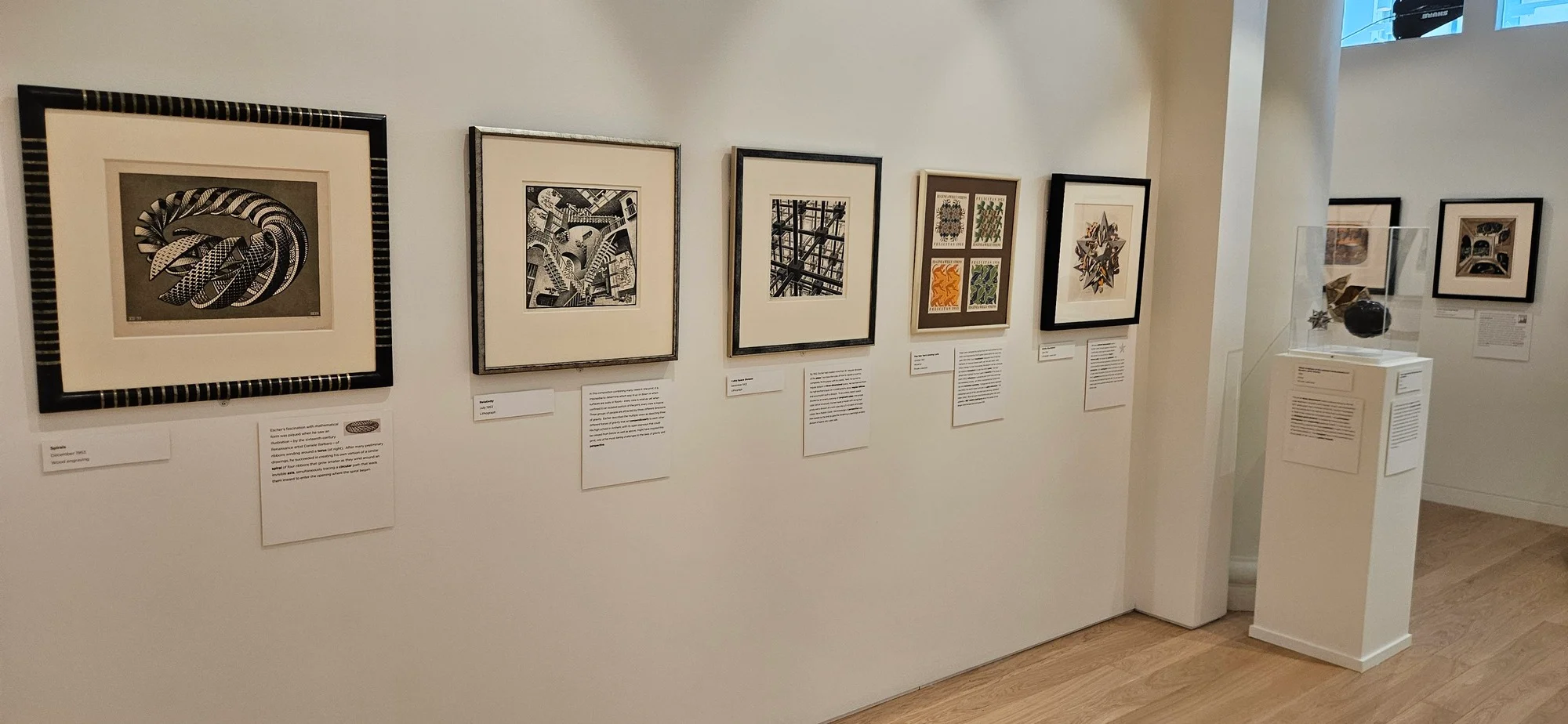
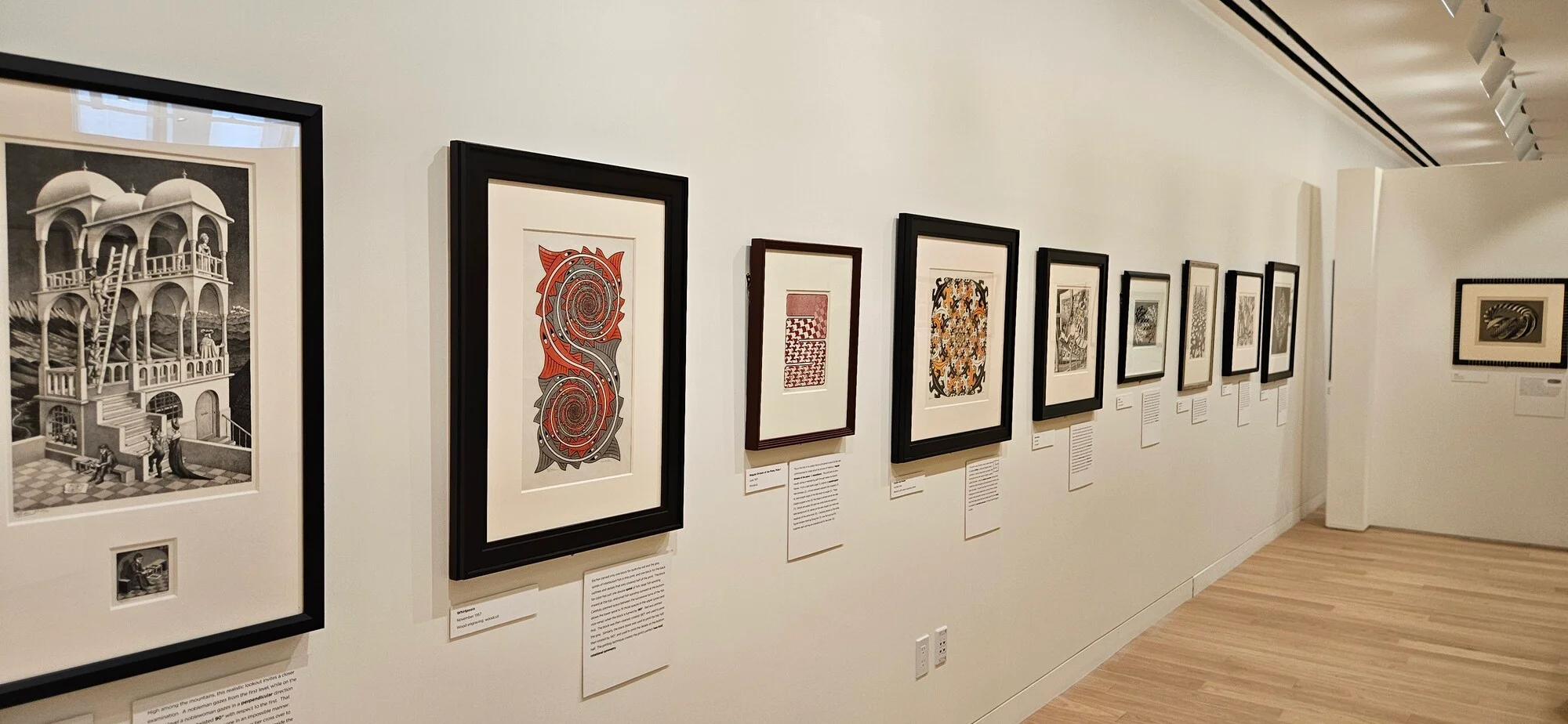
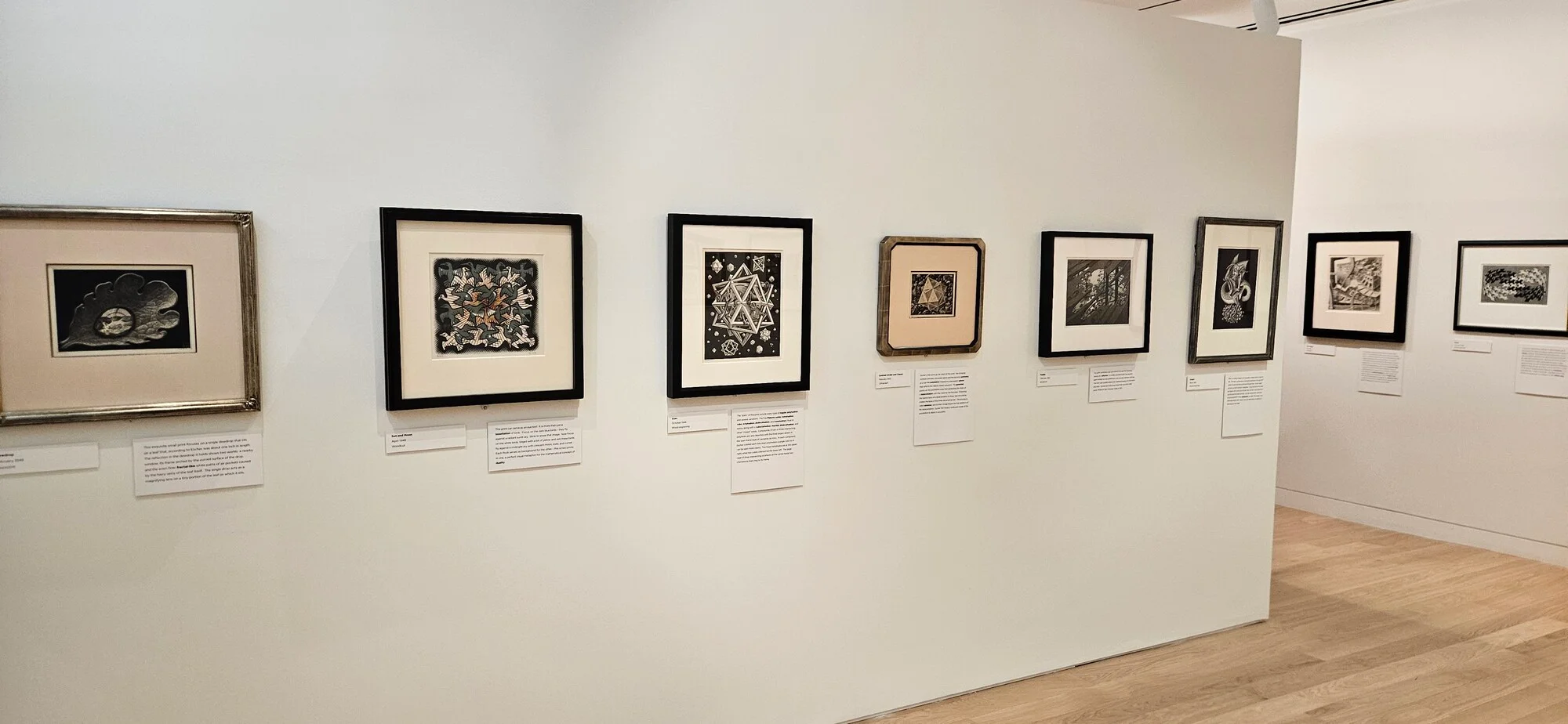
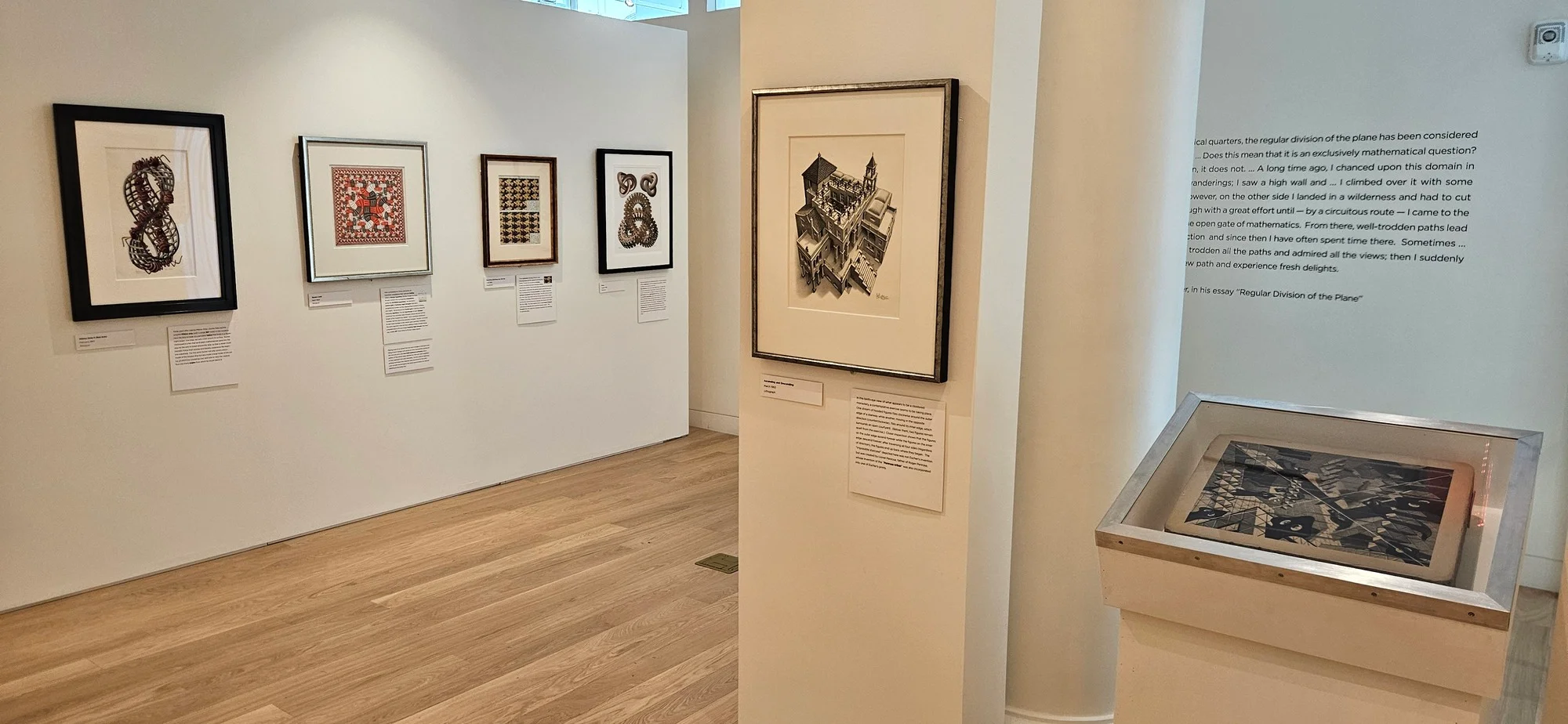
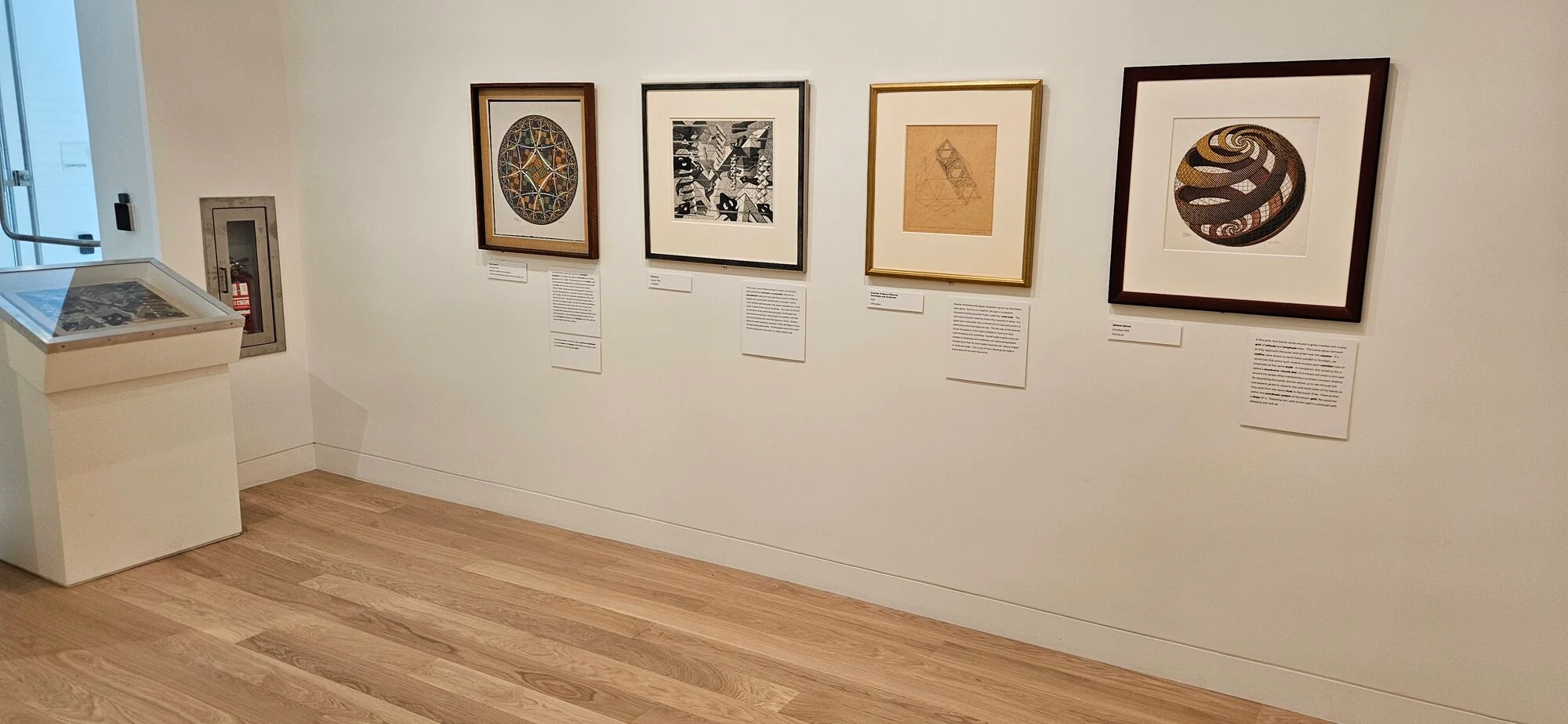
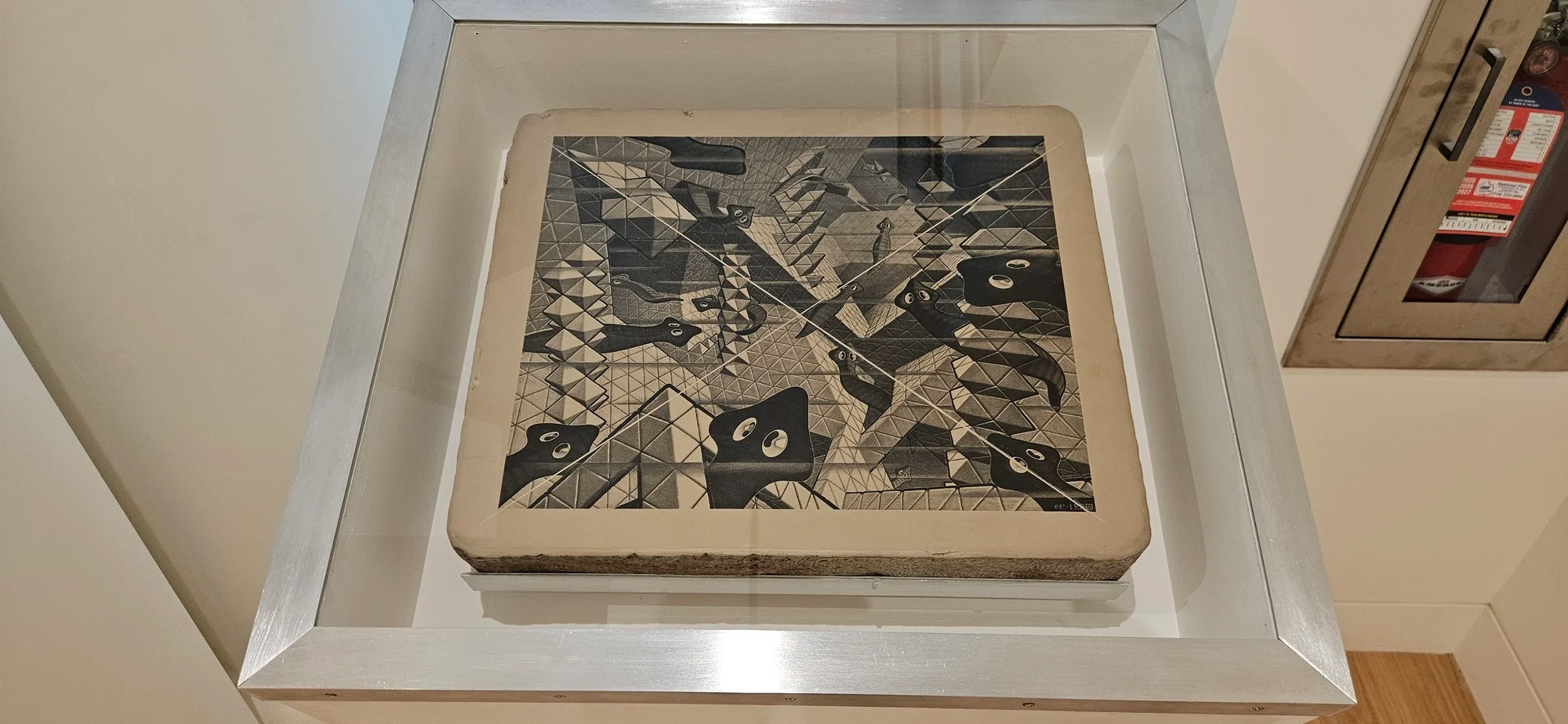
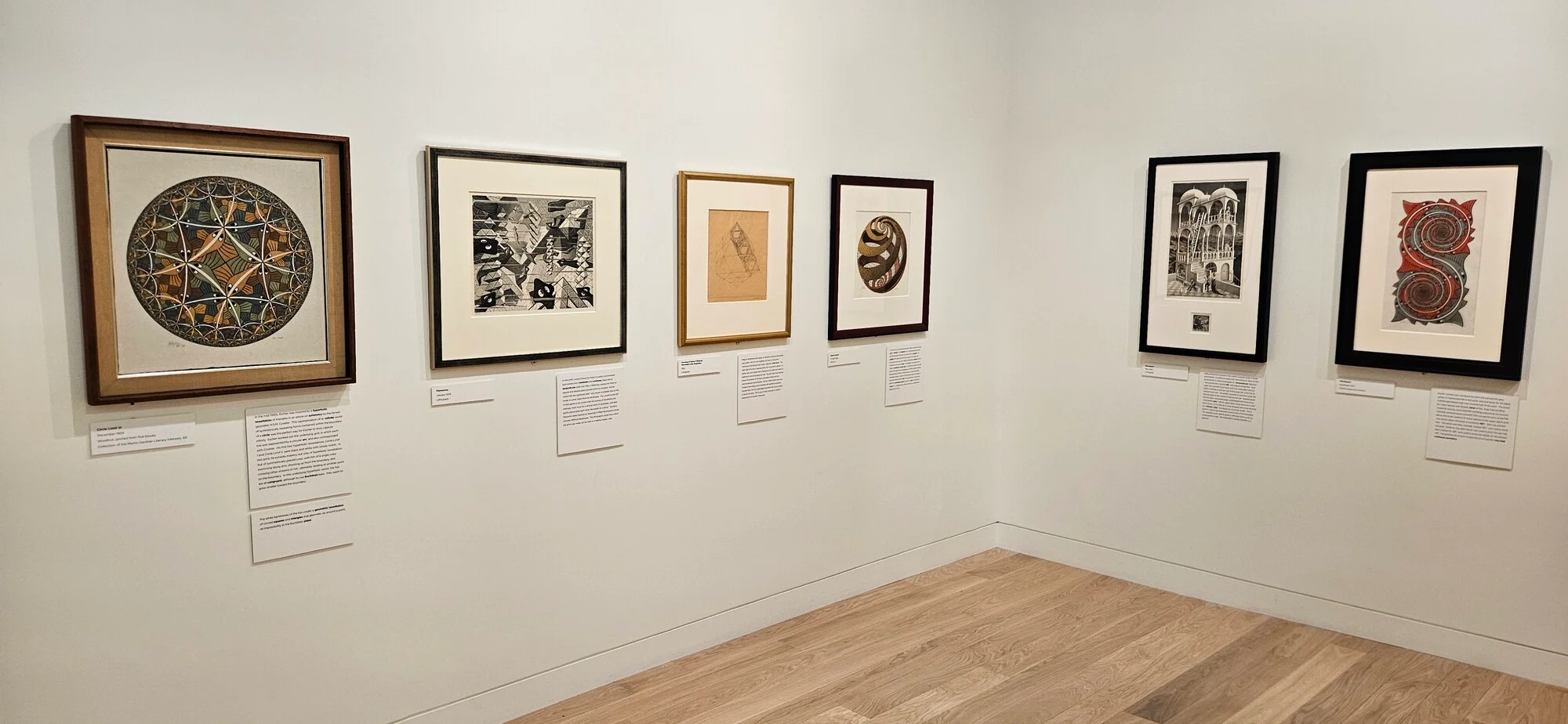
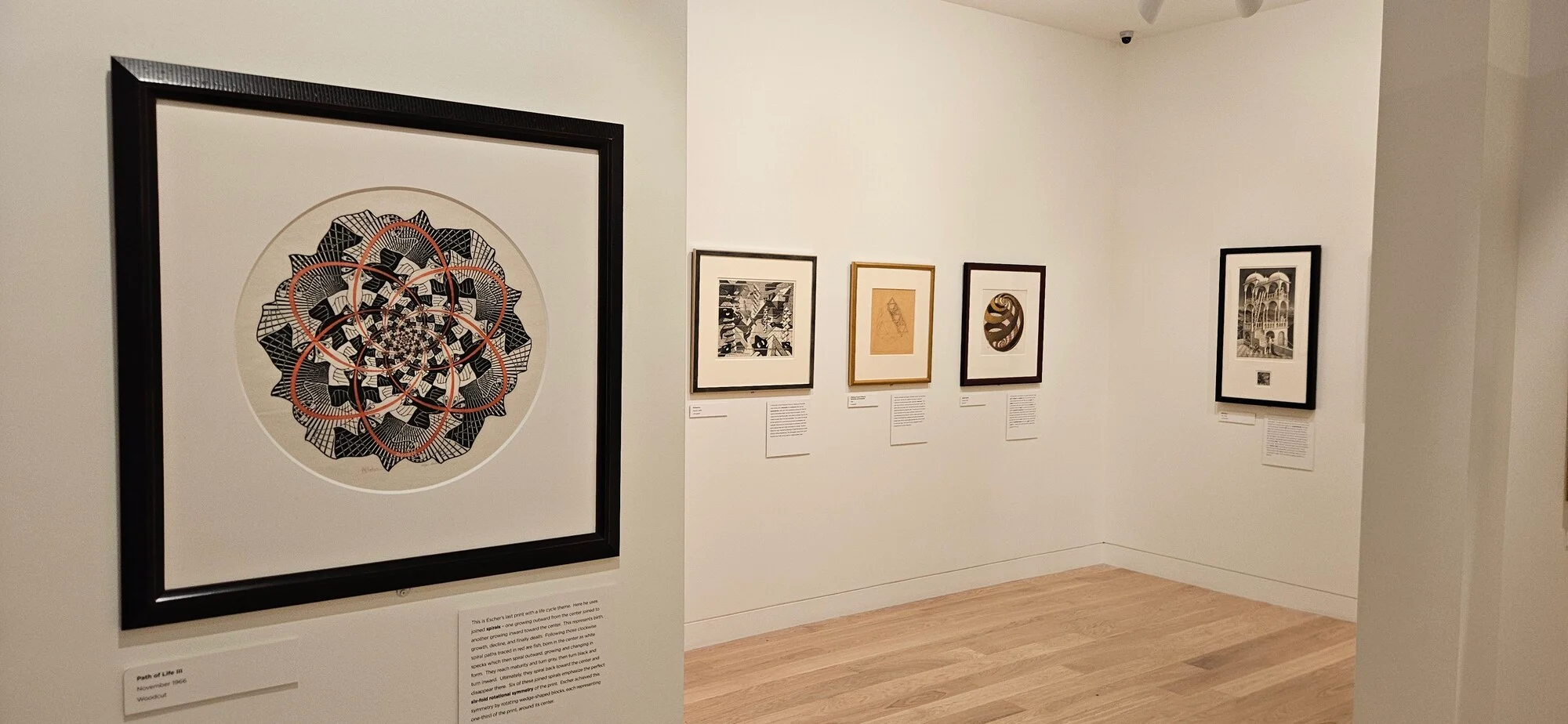
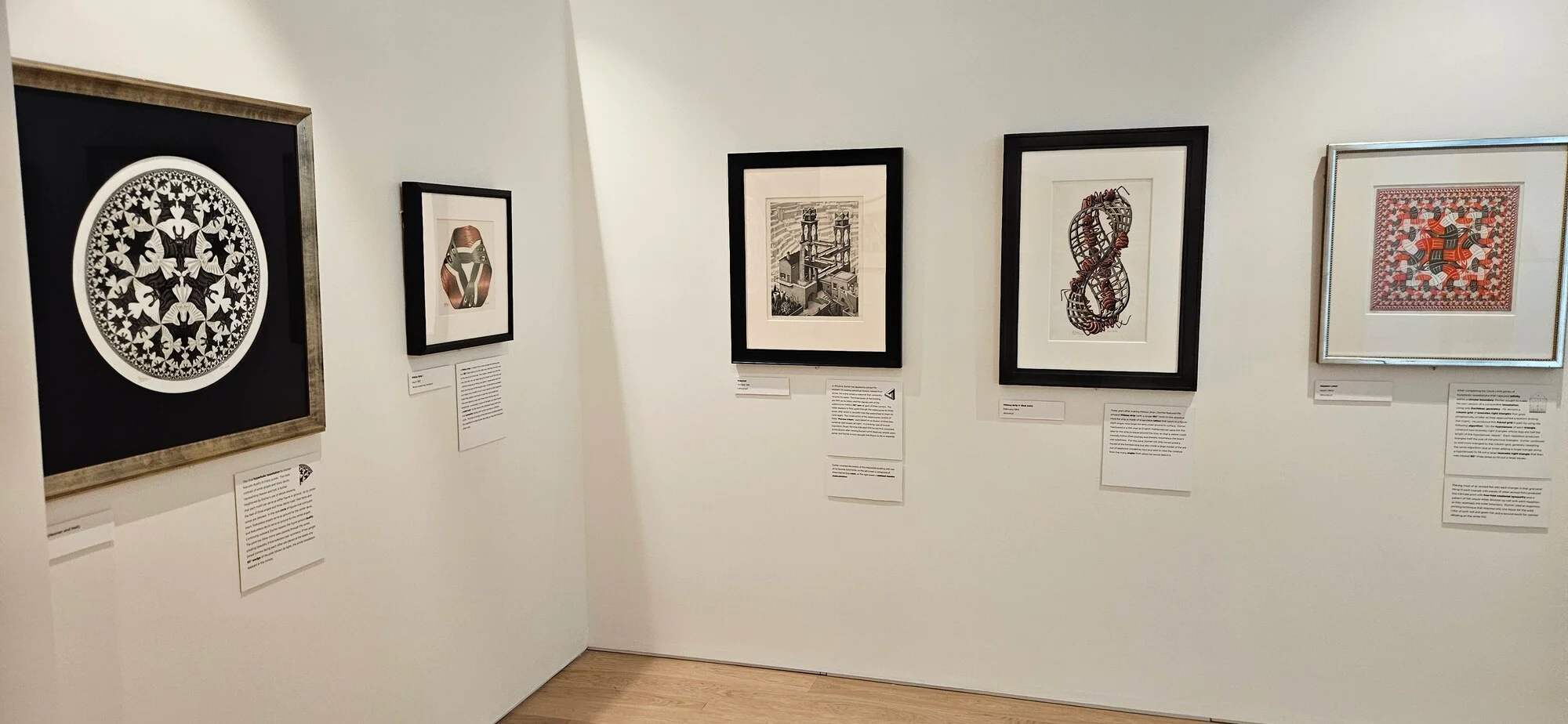
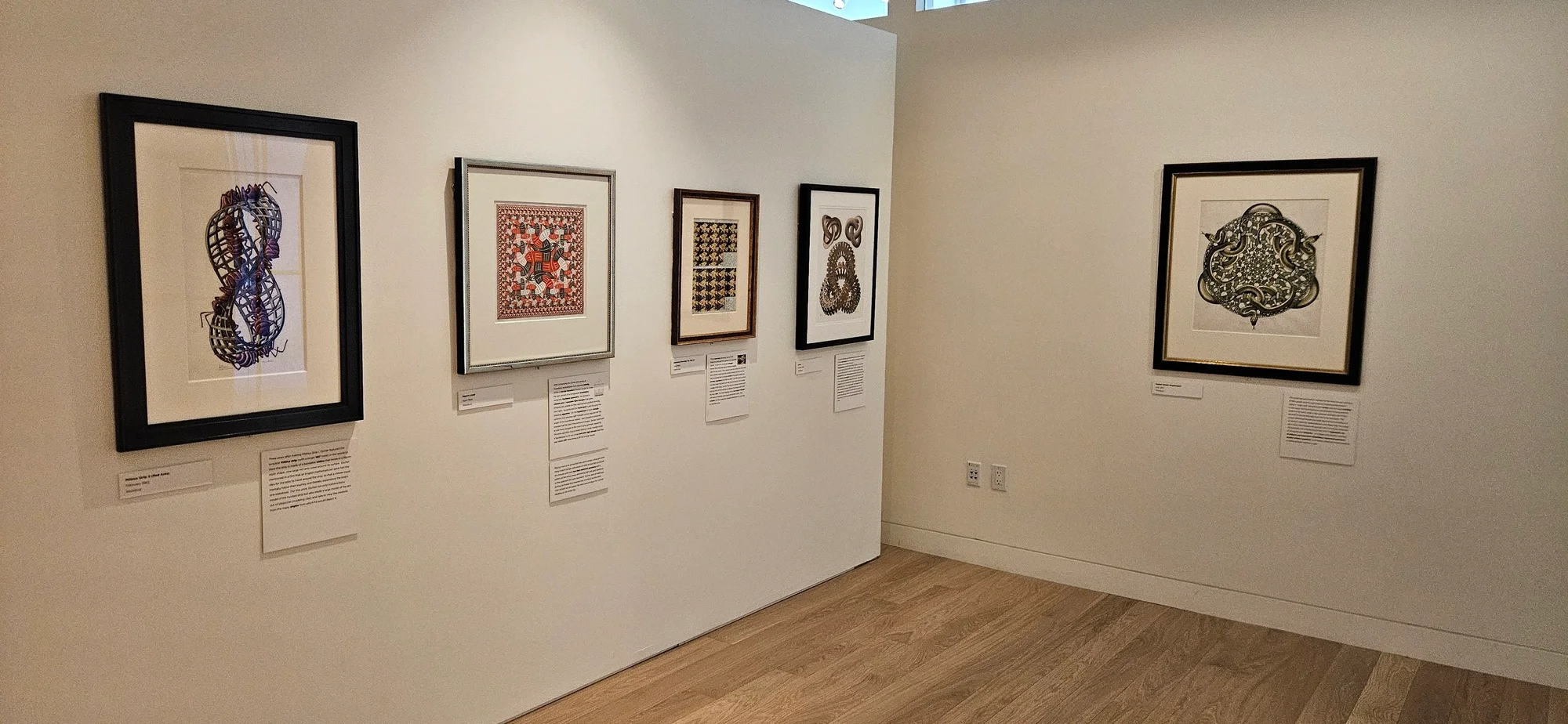
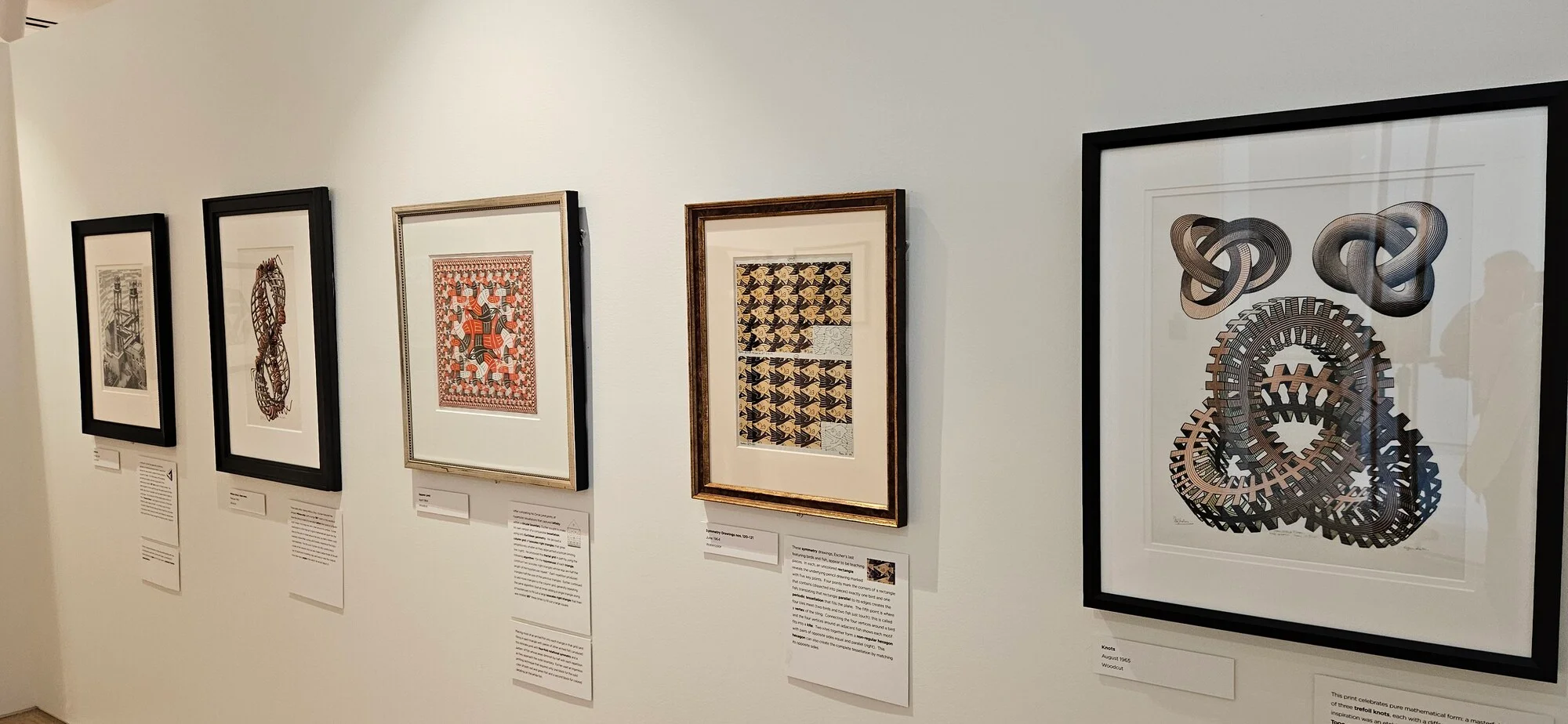
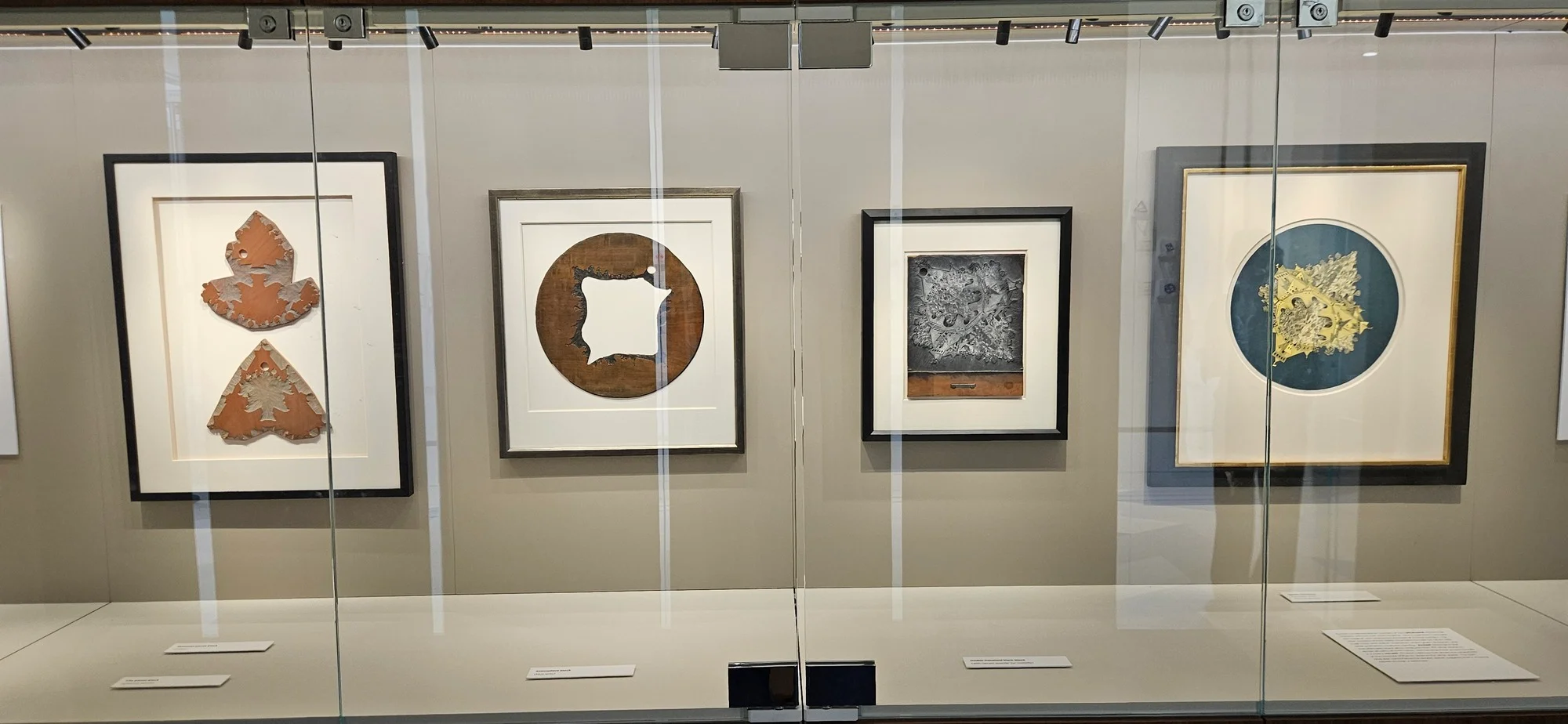

The National Museum of Mathematics (MoMath), the leading math museum in North America, today announced the upcoming exhibition Mathematics and the Art of M.C. Escher on view October 1, 2026 – February 8, 2027. Celebrated globally for his mind-bending images of impossible architecture, tessellations, and visual paradoxes, Escher is a beloved figure in both the art and math worlds. This is the first major M.C. Escher exhibition in Manhattan and differs from previous Escher exhibitions by highlighting the many ways in which his work intersects with mathematics. Mathematics and the Art of M.C. Escher explores the artist’s work in a new way: through the elegant mathematical structures and concepts that underpin his astonishing creations.
The exhibition has been developed by MoMath in consultation with renowned M.C. Escher expert Doris Schattschneider; MoMath Outreach Mathematician Chaim Goodman-Strauss; Dr. Jürgen Richter-Gebert, professor at the Technical University of Munich; Presidential Teaching Award winner and Escher family friend David Masunaga; and North Carolina Museum of Art curator David Steel. The exhibition is produced by The Escher Foundation and includes the Traveling Exhibition provided by: PANART Connections.
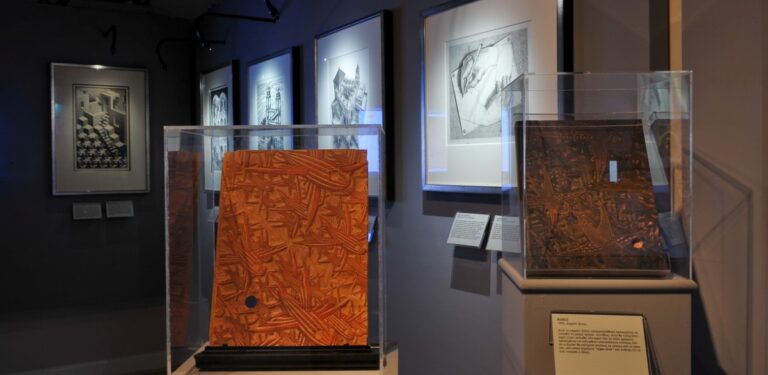
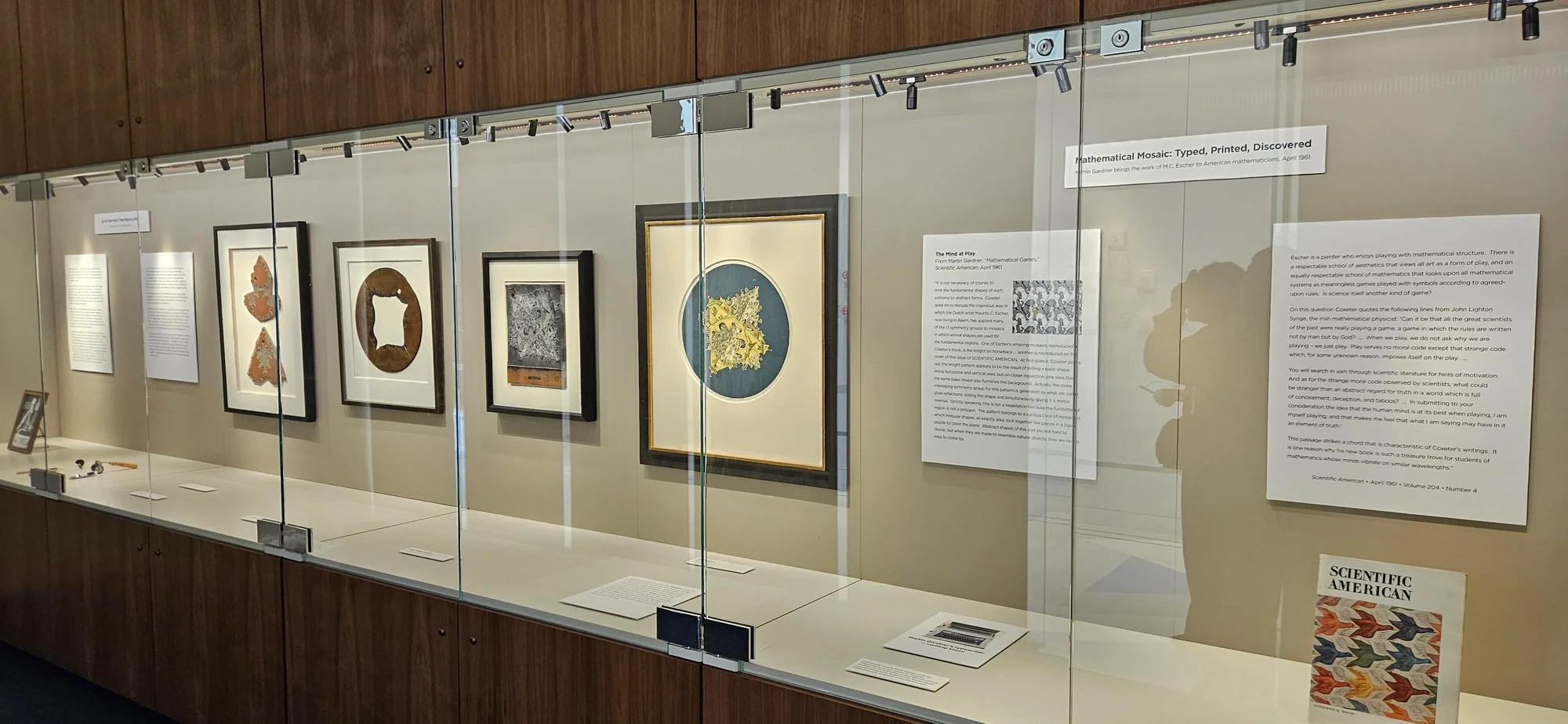
Mathematics and the Art of M.C. Escher features more than 60 wood engravings, lithographs, woodcuts, mezzotints, and drawings and includes woodblocks and a lithographic stone used by the artist, plus three-dimensional objects that he designed. Interpretive materials identify and explain mathematical concepts and structures found in the prints. The selection of works examines Escher not only as an artist but as an intuitive geometer whose works give visual form to mathematical ideas rarely seen outside of textbooks. The exhibition is accompanied by a publication authored by Doris Schattschneider and Salvatore Iaquinta, Secretary of the M.C. Escher Foundation, with a foreword by MoMath Executive Director and CEO Cindy Lawrence.
M.C. Escher struggled with mathematics as a student, barely passing his final high school math exam, yet he:
- learned from technical mathematical articles and illustrations;
- developed his “layman’s theory” classifying shapes that can fill the plane, some in a regular manner;
- used mathematical ideas, particularly geometry, in creating his prints;
- created visual metaphors for abstract mathematical concepts;
- depicted complex symmetrical mathematical forms;
- played with perspective, gravity, infinity, and spatial logic to create illusions; and
- interacted with many mathematicians.
About MoMath
The National Museum of Mathematics (MoMath) is North America’s leading cultural institution dedicated to the wonders of mathematics and its many connections to the world around it. In 2026, MoMath moved to a permanent new location at 635 Sixth Avenue between West 19th and West 20th Streets in Manhattan’s Chelsea neighborhood. The Museum is open seven days a week, from 10:00 am to 5:00 pm unless otherwise noted at momath.org.
MoMath provides extensive online programs along with more than 70 on-site exhibits, including Beaver Run and the Square-Wheeled Trike. MoMath welcomes residents, members, families, school groups, and visitors from across the country and around the world. In-person activities such as the annual NYC Math Festival, talks, birthday parties, events, and field trips are also offered at MoMath.
Since opening in December 2012, MoMath has welcomed more than 1.5 million visitors, including more than 300,000 students. When New York City mandated closures in March 2020 due to the COVID-19 pandemic, MoMath shifted its programming online, establishing a strong global presence. Since then, MoMath has conducted nearly 6,300 online programs, reaching more than 190,000 participants from all 50 U.S. states and 145 countries.
M.C. Escher artwork ©The M.C. Escher Heritage